Tuesday, February 10, 2015

Baruch Journalism Students Cover Entrepreneurial #Cuba (Updated)

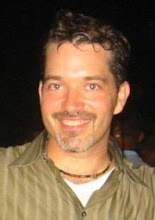
Four of the 11 Baruch College journalism students who joined Professor Andrea Gabor on a January 2015 enterprise reporting trip to Cuba.  

Last month, 11 Baruch College journalism students, led by Prof. Andrea Gabor (Bloomberg Professor of Business Journalism), left for Havana as part of a January-term class on Covering Emerging Entrepreneurship in Cuba. Professor Gabor has just published a fascinating post on her own blog about their life-changing educational adventure. The students spent eight days in Cuba and reported on the recent economic changes instituted under President Raul Castro, especially in the growing small-business sector of so-called cuentapropistas, which now includes close to 500,000 Cubans, triple the number in 2010. The class arrived just weeks after President Obama and President Castro announced their historic détente, which will open Cuba to more American goods and visitors and establish formal relations between the countries.

The students met with a wide range of experts on Cuban business and culture, including Univ. of Havana academics, filmmakers, and Cuba Emprende, a private non-profit that helps train new entrepreneurs in Cuba. They also interviewed over a half-dozen small-business owners about the new opportunities and challenges they face. The students produced a rich trove of stories—in both print and multi-media—about the rise of women entrepreneurs in Cuba; an experimental, sustainable farm just outside Havana that supplies the burgeoning sector of paladares, or independent restaurants; the gray market in information entertainment distributed via computer memory devices; and much more. 

To see the stories, please click on HERE

The trip took a year to plan and involved the help of many people both at Baruch and in Cuba. At Baruch, special thanks go to Prof. Joshua Mills and the Journalism Department; Dean Jeff Peck and Boo Choi; Dr. Richard Mitten and his colleagues in study abroad; and Prof. Ted Henken.

-->

Monday, February 9, 2015

La red de la calle cubana (Snet o RoG)...

To read the entire post on the Snet (Street Net) or RoG (Republic of Gamer) phenomenon in Cuba (which begins with a long, detailed list of rules), go the the blog Cubano 1er Plano.

However, below I have extracted what I think is the crux of the article:

1) What's taking the GOC so long to set up its own national wifi network?
2) What became of the famed fiber optic cable from Venezuela? What are we waiting for?
3) Snet is a living, breathing example of what is possible when the is a will (ie, where there's a will, there's a way). 
4) "A journey of a thousand miles begins with a single step."
5) And none of this considers how the change in US telecom regs will impact internet access and price on the island. 

Here's an excerpt of the last three paragraphs of the article, which zero in on some of these points rather eloquently:
"Estamos esperando aún, a 15 años después de haber comenzado el siglo XXI, que él país ponga en funcionamiento una red WiFi nacional, que de acceso a conectarse a Internet pagando un precio acorde al salario que devengan los cubanos. Dejar atrás estudios, y estudios y más estudios, y experimentos y luego más estudios de algo que en el mundo entero (incluyendo países como Argentina, Venezuela, Brasil, Uruguay, Bolivia, Ecuador, Chile y otros del tercer mundo (muchos miembros de la CELAC) ofrecen de forma gratuita o a un costo mínimo.
Ya tenemos el famoso cable de fibra óptica (hace varios años) ¿Ahora que esperamos? ¿Qué Internet pase de moda, o comience la era de la web 10.0, para dar acceso a la población de nuestro país a la 2.0? Un amigo siempre me dice cuando hablamos de estos temas, que en Cuba hay acceso masivo a las tecnologías de punta, de la punta de atrás de la flecha…
SNET es el vivo ejemplo que cuando se quiere se puede, sin complicaciones y con una estructura organizada y con reglas éticas y técnicas que han permitido su supervivencia. Cada persona que integra esta red, pasó de la palabra al hecho, de las ideas a la realidad, de lo insipiente a la experiencia… pues como dijera la milenaria sabiduría China: "El camino más largo de todos, comienza dando el primer paso"

Sunday, February 8, 2015

Dos amigos cubanos cruzan palabras: Miriam Celaya & Antonio Rodiles

Over the past week an important debate has surfaced among two of the most eloquent (and sharp-tounged!) dissidents in Cuba's diverse opposition:

Miriam Celaya and Antonio Rodiles.
(pictured together to the left)

Why is this important? Well, to the extent that Cuba's dissidents and civil society leaders will have any influence upon the pace and scope of the US-Cuba engagement, what those dissidents think, how they express themselves, and interact with one another will impact the diplomatic opening.

Also important - as we saw during the Congressional hearings last week - is how various US business groups, members of Congress, and pro-engagement and pro-embargo lobbies position themselves vis-a-vis the dissident community on the island.

Remember that the Cuban activists invited to speak or share statements at the hearings (Rosa María Payá, Miriam Leiva, Berta Soler, Manuel Cuesta Morúa, Dagoberto Valdés, and Antonio Rodiles) did not speak with a single voice, and their competing comments, criticisms, and praises of U.S. policy were later highlighted by US lobbying groups to justify and reinforce their own positions: See #Cuba_Now and Capitol Hill Cubans for two examples.

The Rodiles-Celaya debate dates back to late December when two different groups of dissidents issued two very similar statements (Espacio Abierto de la Sociedad Civil - here; and Foro por los Derechos y Libertades - here), weighing in on the Obama-Castro deténte.

Among other things, this back-and-forth is about whether Cuba's opposition can properly be described as having become "divided" into two opposing poles following "D-17" (the new Cuban term for the shift in U.S. policy from isolation to engagement). Also important is the question of whether (and which) Cuban dissidents and civil society leaders will be included in future diplomatic negotiations.

Rodiles outlines what he sees as a split in the dissident community.  On one side are those who see Obama's move as an "abandonment" or "betrayal" of the Cuban opposition, and providing diplomatic legitimacy and a much-needed economic lifeline to the Cuban government.

According to him, on the other side are those who see Washington's move as a (golden?) opportunity for the dissident movement to occupy new space and engage more directly with the mass of the population, now that it won't be so easy for the government to dismiss them as "mercenaries."

His first statement is at Diario de Cuba: "Hablar con la misma voz." He thinks that this split is not a good one as it dilutes the message of the dissident community, which should speak "with a single, unified voice."

He does grant that it's to be expected that the dissident community sound like a "jazz combo" (where clashing, discordant views are enriching), but he also insists that the differences among them be clearly laid out making the implications of those differences transparent as well.  He gives a very clear (though perhaps debatable) point-by-point listing of those differences.

However, where Rodiles sees a split, Celaya sees a rich and healthy diversity of opinion. Her first response to Rodiles is at 14ymedio: "Una confrontación esteril." She also argues that what Washington does is much less important than what Cubans themselves do with this changing and challenging scenario.

Rodiles response to her is here: "Notas sobre una polémica," and Celaya's response to him is on her blog, A pie y descalzos: "Réquiem por un debate."

Interestingly, Rodiles also recently challenged Yoani Sánchez, Reinaldo Escobar, and Dagoberto Valdés (who seem to share Celaya's point of view) to join the debate.

Both 14ymedio and Estado de Sats have catalogued this developing polémica at their sites.

Friday, February 6, 2015

"Cuba's Perplexing Changes": #Cuba in Transition: Volume 24 - All papers now live and available in PDF!


Papers and Proceedings of 
the Twenty-Fourth Annual Meeting of
The Association for the Study of the Cuban Economy
The Hilton Miami Downtown Hotel
Miami, Florida
July 31-August 2, 2014 

Thursday, February 5, 2015

Overcoming Cuba's Internal Embargo

Click HERE to read our article!

Wednesday, February 4, 2015

When @Malinowski talks, you should listen

As the administration's human rights point-man Tomasz Malinowski - born in Communist Poland - said in his Senate testimony, U.S. policy isn't about waiting on the whims of the Castro government anymore:

"[The] Cuban government has succeeded in making our embargo and its isolation from the United States a bigger issue than its own repression, making it difficult to mobilize international pressure to improve respect for human rights on the island. To its own people, the government has justified Cuba's isolation, poverty and lack of democracy as being a result of American hostility. These were bad excuses; they justified none of what the Cuban people have suffered all these years. But we have to acknowledge that, over the years, shifting the blame to America has worked for the Castro government.

It is not going to work any more.

Now, every country in Latin America and the Caribbean, and indeed around the world, knows that the United States is not the obstacle to Cuba's integration with the hemisphere and its prospects for economic development. Cuban policies are the obstacle. Now every citizen of Cuba knows that the U.S. is willing to have improved relations with their country, to support private business on the island and to help connect them to the world. These steps have raised the Cuban people's expectations, and shifted the burden of meeting those expectations back upon the Cuban state."

H/T @Cuba_Now #Cuba_Now

Update on self-employment & non-agricultural cooperatives in Cuba

(...along with a cautionary tale about La Fontanella pastry shop)

@yoanisanchez: En #Cuba se han autorizado 498 #cooperativas de las cuales 329 ya están funcionando y "están en estudio" 300 más

Trans: In Cuba 498 (new non-agricultural) cooperatives have been approved, 329 of which are open. 300 more are "under review".

@yoanisanchez: A principios de #2015 las cifras oficiales aseguran que 483.000 cubanos ejercen el trabajo por cuenta propia en #Cuba

Trans: At the start of 2015 official figures assure us that 483,000 Cubans are licensed to work "on their own account" in Cuba. (Up 12,000 from August 2014).

Also of import are the following 3 stories about the entrepreneurial triumph and bureaucratic tragedy of Nuevo Vedado's La Fontanella pastry shop:

Here's a recent story in Spanish from @diariodecuba: "Auge y caída de La Fontanella" http://t.co/Wyt7mklb4y"

Here's an excellent reflection on the story (in English): "The Crime of Prosperity in #Cuba" from Havana Times - Entrepreneurial triumph & bureaucratic tragedy of Fontanella pastry shop http://t.co/MunrYxNZLf

Finally, my friend and colleague Regina Coyula reported on this "clipping of wings" back in March 2014 on her blog La Mala Letra (Bad Handwriting): https://lamalaletraen.wordpress.com/2014/03/08/snipped-regina-coyula/

Thursday, January 29, 2015

What to make of Raúl's recent declarations? Or, how are "normal" relations different from "diplomatic" ones?

A friend and colleague just gave the following quick summary (in Spanish) of a recent declaration from Raúl Castro:

El mandatario cubano puso cuatro condiciones como premisas para el restablecimiento de las relaciones bilaterales:

1. La eliminación del embargo.
2. La devolución del territorio ilegalmente ocupado por la Base Naval de Guantánamo
3. El cese de las trasmisiones radiales y televisivas (Radio TV Martí) hacia el territorio cubano.
4. La compensación al pueblo cubano los daños humanos y económicos sufridos como resultado de la política estadounidense.

 * * *

I responded with three questions of my own:

1) Is Raul serious or just saber rattling to strengthen his negotiating position (ahead of future talks that will surely include some or all of the issues above),
2) Would he be willing to indemnify/settle outstanding property claims against the Cuban government (given that he is raising the "reparations" issue himself)? and
3) Is he simply looking for a new series of excuses to prevent real detente and maintain his tried and true enemy as an enemy?

 * * *

Two other colleagues chimed in to the effect that:

*The nitty-gritty of full diplomatic relations -- raising the flags over embassies, naming ambassadors, etc. -- is being negotiated.
*But beyond that, both governments are noting other issues (financial claims, the Guantanamo base, TV & Radio Martí, the embargo itself, etc.) that need to be resolved if they are to consider that relations have been "normalized".
*In other words: "normalized" relations are not equivalent to "diplomatic" relations and neither side is saying that the second is contingent on the first.

In sum, establishing diplomatic relations will be relatively quick and painless, while full "normailization" will take time (years, most likely) and involve painful and controversial decisions on both sides.

Readers: Your thoughts please...

Wednesday, January 28, 2015

The "Cuba Moment"... is really an American Moment

NYU's CLACS holds a usefully frustrating panel - January 28, 2014


I went to an excellent academic panel on "The Cuban Moment" tonight at NYU's Center for Latin American and Caribbean Studies. Like good academicians they (along with the token journalist, Damien Cave of the NYT) were very critical-minded and quite skeptical that any real or positive "change" would come from the Obama-Castro détente.

At the same time, I found myself increasingly frustrated because presumably all of the panelists also thought on December 16 that previous US policy was ineffective, wrongheaded, and even counterproductive - both for the Cuban people and for US interests.

I agree that there's a lot to be cautious and even skeptical about - both in terms of the US's real motives behind the new policy ($, security & stability, or democracy & human rights?) and regarding the extent the GOC will allow any changes to take place that might undermine its internal power and control (ie, in telecom or trade with the private sector).

One take away is that no one should expect positive changes in Cuba or a solution to the Cuban crisis to come from the United States. But is anyone promising that or even saying that it's the goal of the new policy?

Solutions to Cuban problems have to come from Cubans, and especially the interplay between a very powerful state apparatus, weak economy, fractured yet dynamic civil society, and everyday citizens.

Still, I must ask the panelists (and you my readers): What is right/positive about the new policy, what is flawed, negative, or naive, and what would YOU do differently if you were Obama (or even Raul)?

Monday, January 26, 2015

From External Embargo to Internal Blockade: El Yuma is Back on the Blog & Back at Books & Books!

Needless to say, a lot of water has passed under the #Cuba bridge since I last updated my blog in August, 2014.

If you've been following me on Twitter or Facebook, you'll know that I had (and still have) a very good excuse for giving the blog a rest over the past 5 months: Dimitrios Jackson Henken is his name and he arrived into our lives on October 9, 2014, giving me the best birthday present I could have ever wished for! (I turned 43 just two days before he was born).

Happiness is a warm son! Bang bang, shoot shoot.

After becoming an expert at changing diapers and singing "De Colores" to my young son during October, November, and December (...y por eso los grandes amores de muchos colores me gustan a mi, y por eso los grandes amores de muchos colores le gustan a Dimitri...), I spent a good portion of the second half of December and all of January deploying my dormant Cuba expertise.

You can see some of my comments in The New York Times and the NYT's Op-Talk Blog, The Wall Street Journal, AP, CNBC, CNN, the NPR shows All Things Considered and On Point (where I shared the mic with USA Today's Alan Gómez, Cuban blogger and journalism professor Elaine Díaz, and director of the Institute for Cuban and Cuban American Studies at the University of Miami Jaime Suchlicki), and Diario de Cuba (where I discuss the Cuban Internet en español with José Remón, Larry Press, Iván Darias, and Ubaldo Huerta).

You can also check out Time Magazine, the Los Angeles TimesFrance 24, Australia's ABC radio show The World Today, China Central TV's World Insight show (with professors Rafael Hernández of Temas in Havana and Sun Hongbo from the Institute of Latin America, Beijing), USA TodayAl Jazeera-America, Arise America, McClatchy (on paladares!), The Miami HeraldEl Nuevo Herald, Martí Noticias, and on María Elvira's Miami TV show (part 1 and part 2).

Arch Ritter and I have also been busy publishing a handfull of overlapping op-eds related to our new book, Entrepreneurial Cuba: The Changing Policy Landscape (50% off offer here). First, we published, "Abajo con el bloqueo en contra de los emprendedores cubanos," in 14ymedio on December 13.

Later, following the historic December 17 Obama-Castro joint announcement to reestablish diplomatic relations after almost 54 years, we expanded on that by publishing updated reflections in New York City's El Diario, The Huffington Post's ongoing 90 Miles feature (the entire January series is highly recommended), and in a forthcoming article in the February issue of the foreign affairs journal Current History (a version of which is included below).


After a restful and sunny January spent on Miami Beach with my growing family, last Friday evening, January 23, I was proud to present our book at the Coral Gables cultural institution, Books and Books, with the generous cosponsorship of Florida International University's Cuban Research Institute and its director Jorge Duany, who kindly introduced me (the Livestream podcast of the event is imbedded below and starts at minute 5:15).


A big thanx to the 75-100 full house of people who attended (even those who came early to see me when they were really interested in hearing Marius Jovaisa present his new book of arial photography, Unseen Cuba). Special thanks are due to the honored guests Dimitri Jackson, his mom Tasha, and Abuelita María; Sandra Ramos & family; Eduardo Suñol & Nancy Regal; as well as to Amparo Pujol, Jorge Sanguinetty, Nicholas Sánchez, Juan Juan Almeida, Ernesto Hernández Busto, and former Czech Ambassador Martin Palous, good friends and colleagues, one and all!

For frozen East Coast, tri-state residents who could not escape to Miami for the event, Arch and I will present our book together on Thursday evening, April 2, 2015, at the Americas Society.  Details to follow.

* * *

Are Raúl’s Reforms Change Cubans Can Believe In?
Cuba’s Emerging Entrepreneurs and the Island's Shifting Digital Media Landscape
By Ted A. Henken and Archibald R.M. Ritter

In scores of interviews conducted over the past 15 years with Cuban entrepreneurs for our new book, “Entrepreneurial Cuba,” Arch Ritter and I often heard the following two very pregnant Cuban sayings:

El ojo del amo engorda el caballo” (The eye of the owner fattens the horse) and “El que tenga tienda que la atienda, o si no que la venda” (Whoever has a store should tend to it, and if not then sell it”).