Tuesday, January 15, 2013

Me voy pa' México pa' hablar de Cuba


Lugar del evento
FLACSO Sede México 
Sala de Seminarios #2 

Cam. al Ajusco 377
Col. Héroes de Padierna, Tlalpan 
México, D.F.

Thursday, December 20, 2012

Cuba se mueve...

Cuba se mueve

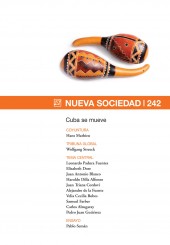
NUEVA SOCIEDAD 242   Noviembre-Diciembre 2012
Leonardo Padura Fuentes Eppur si muove en Cuba. 
Elizabeth Dore Historia oral y vida cotidiana en Cuba. 
Juan Antonio Blanco Cuba en el siglo XXI. Escenarios actuales, cambios inevitables, futuros posibles. 
Haroldo Dilla Alfonso Las encrucijadas de la política migratoria cubana. 
Juan Triana Cordoví Cuba: ¿de la «actualización» del modelo económico al desarrollo?
Alejandro de la Fuente «Tengo una raza oscura y discriminada». El movimiento afrocubano: hacia un programa consensuado. 
Velia Cecilia Bobes Diáspora, ciudadanía y contactos transnacionales. 
Samuel Farber La Iglesia y la izquierda crítica en Cuba. 
Carlos Alzugaray Las (inexistentes) relaciones Cuba-Estados Unidos en tiempos de cambio.
Pedro Juan Gutiérrez Poesía visual.

Wednesday, December 19, 2012

La blogósfera cubana: 2012 Year in Review


In my previous post, I mentioned that there had been a lot of significant activity over the past year in Cuba's emergent blogosphere.  Here, I will give a brief chronicle of what I see as the most important developments.  Readers are encouraged to comment with other important things I may have missed.

[Note: This is going up now in beta, and I will add in all the hyperlinks later].

Let me begin by giving a big shout out and welcome back to Elaine Díaz and her blog La polémica digital, who - after bidding us all farewell in her "último post" over the summer - returned to blogolandia just yesterday with a new entry, "Israel Rojas cantará por ti," showing her in top form and ready to engage with her readers once again.  Happily, her readers are back and have already generated more than 40 comments in less than 24 hours.

Her return to the blogosphere seems motivated in part by the increasingly loud protestations from members and supporters of the "closed for repairs?" blog of La Joven Cuba at the University of Matanzas.

As I first reported here back in June, the guys at LJC took an extended summer vacation in July and August, insisting that: "aquí estamos y estaremos."  By mid-September this indeed seemed to be the case as they were blogging in full force once again by then.

However, LJC went silent again in October posting just twice that month (neither post was written by the bloggers themselves) and not at all in November.  Early November did see a post provocatively entitled, Soy contrarevolucionario?, by Alejandro Cruz at the blog, Cubano Primer Plano, that wondered aloud what had happened to them.

December - in contrast - has seen an outpouring of posts (mostly at other sites, such as here, here, here, and here) making clear that their "temporary vacation" was not voluntary and that they are fighting to go live once again.

In fact, if you go to their blog now, you will find the announcement that I have taken a screen shot of and posted to the left here.  It reads:

"The blog continues blocked for the administrators and we can't access it to comment or read it.  We'll continue publishing thanks to the solidarity of our friends.  We have confidence that common sense will break the virtual barrier and that we'll be able to return to normal in the near future." 

I wish them luck, but who says that you need anyone's permission to blog.  Oh yeah, we're talking about Cuba, I almost forgot...

I do hope to welcome them back to blogging once again soon, especially given that - while clearly from WITHIN the revolution - they had become more critical of errors and broken promises, attracted a wide readership, and allowed for a lively and open debate in their comments section.

But one lesson from their shut down is that even the most revolutionary bloggers can be silenced if they:

a) insist on editorial independence and

b) rely on a government institution for their Internet access.

Or, as the perceptive Havana Times blogger Alfredo Fernández wrote in a post of his own about the Díaz and LJC closures back in August:
"Things must be going pretty bad for the Cuban government if it has to pressure even its younger defenders to give up their efforts on the Internet.
[...]
Now that it seems that Raulism can’t even put up with its 'independent defenders' in a medium such as the Internet —with very low impact on Cuban public opinion— it seems logical to speculate on who will be the next pro-government blogger to 'say farewell'."

So, here's my quick 2012 Year in Review of the blogósfera cubana:

1) First, there was the April "Blogazo por Cuba," hosted by La Joven Cuba at the University of Matanzas, otherwise known under the unfortunate title "Encuentro de Blogueros Cubanos en Revolución."  Importantly, this event was attended by and Tweeted about by none other than Mariela Castro (see here and here for some of her Tweets).

2) This was followed by a fascinating, heated debate over the seemingly exclusive, "by invitation only" nature of the gathering.  As helpfully summarized (and translated) by Ellery Biddle at Global Voices, the most important posts in this debate are the event's final declaration, an eloquent response to the meeting by members of the Observatorio Crítico (actually written beforehand), as well as the criticisms from Elaine Díaz (who declined an invitation to attend) and Yasmín Machado (who was not invited at all).

3) This was in turn followed by LJC's later critical posts about Raúl's reforms and about the newspaper Granma.  There were also the previously mentioned pair of LJC posts in June, first saying goodbye and then saying that they weren't going anywhere.

4) The #BlogazoxCuba event can be contrasted with the 3-day June "Festival CLIC" hosted by Estado de SATS and co-sponsored by the Voces Cubanas Blogger Academy and the Spanish EBE blogging collective.  Havana Times blogger Alfredo Fernández summarizes CLIC here, and some of the debate that that three-day gathering generated can be read here and here.  While the portal Havana Times had no formal participation in the event, it was accused of imperial scheming by CubaDebate, with responses from HT editor Circles Robinson and Dmitry Prieto.

5) Unfortunately, the portal Bloggers Cuba has gone dark and as previously mentioned, Elaine Díaz decided to call it quits in order to "dedicate her time to research and teaching..."  Still, individual bloggers associated with BC, such as Yasmín Machado, her husband Rogelio Díaz, as well as Sandra Alvarez (Negra Cubana tenía que ser), have continued to blog quite intensively, and in the case of Yasmín and Rogelio, critically.  Similarly, the blog portal of Observatoiro Crítico has become more active, as has what seems to be a new and more pro-regime site called Cubano Primer Plano.

It is noteworthy that - without mentioning the temporarily jailed Antonio Rodiles by name, OC did post a brave declaration against the rise in arbitrary detentions in Cuba, signed by many of its members including Yasmín Machado.

6) In my humble opinion, the BIG NEWS of the year is that both Voces Cubanas and Havana Times have become even more bold, inclusive, vital, and active over the past year, with HT hosting an always broader and more critically engaged array of voices, including translations of great articles by Samuel Farber, Fernando Ravsberg, and Haroldo Dilla, as well as a trailblazing series of interviews conducted by Yusimi Rodríguez of people like Dimas Castellanos and Miriam Celaya, and others by Dmitry Prieto.

7) Voces Cubanas has doubled down on its on-going and expanding three-pronged projects all done on a "pluralistic, inclusive, and autonomous" basis.  Given the constant unsubstantiated claims from the Cuban government and its official bloggers that the members of VC are "mercenaries" working in the service of some dark foreign power, VC has reiterated:
"We are a web site that receives financing from no government, protection from no institution, advice from no expert, and orientations from no political party."
"Somos un sitio web que no recibe financiamiento de ningún gobierno, protección de ninguna institución, asesoramiento de ningún experto ni orientaciones de ningún partido."
a) Its home portal has expanded to include an always more diverse array of bloggers (also available in translation).  They have also recently produced an instructive brochure describing all these and many other activities, aimed "at working not only in the virtual world," but "in the real Cuba" as well.

b) The digital magazine VOCES - edited by OLPL - continues to put out new editions on an almost monthly basis (brochure), and

c) The ALT-TV series "Razones Ciudadanas" has entered a more technically advanced second season with new episodes dedicated to "Cuban Law," "The PCC Conference" in Jan 2012, "Cuban Elections," "The Legitimacy of the Cuban Government," and "Raúl's Reforms" (brochure).

8) Voces Cubanas has also done pioneering work - under the leadership of Yoani Sánchez - reaching out to support and publicize other independent civic initiatives such as the gatherings and marches of Las damas de blanco, the meetings at Estado de SATS, the public art and poetry festivals of Omni-ZonaFranca, the appearance of 1Cubano+ (just another Cuban) - the eloquent series of critical monologues produced by the once and future cyber-activist, Eliécer Avila -, and the trials, tribulations, and provocative graffiti art of El Sexto.

VC even organized a voluntary civic relief effort for the victims of Hurricane Sandy, collecting supplies and sending them to Cuba's Oriente to be distributed.

Sánchez has also actively reported on the systematic rise in detentions and other violations of human rights and leant her cyber-support (and given Twitter classes) to members of Cuba's various independent human rights organizations, such as Hablemos Press, La Union Patriotica, and the Cuban Commission of Human Rights and National Reconciliation.

9) 2012 has also seen a marked expansion of the use of cell phones in Cuba - as reported by Cafe Fuerte - and an increase in the numbers of Cubans who use their phones send SMS messages that magically turn into Tweets allowing users a presence on the Internet with out actually having access to the Internet.  This expansion is largely due to the Twitter workshops that Sánchez has been giving from her home, resulting in a new crop of over 100 Twitter users whom you can follow yourself.

10) Finally, there was a recent session of "Ultimo Jueves" in late-November (the on-going, Temas magazine sponsored gatherings at the Fresa y Chocolate café) dedicated to "Culture, Movements, and Social Networks in the Internet."

You can read a summary of the event here and reactions to it here and here.  While I obviously wasn't there, I have been informed by Carlos Alzugaray - who was there - that Antonio Rodiles, recently released from jail, was present in the audience and allowed to participate by asking a question.

Rodiles later confirmed this to me.

*Note: I also just received a call for papers from Temas, announcing a special issue of the magazine to be published in May under the title, "What Is Information Society?"  The deadline for submissions is March 15, 2013.

Unfortunately, the panel invited to speak seems to have been heavily weighted toward official or semi-official voices, with almost no space for representatives from civil society.  It was composed of Milena Recio, Professor of Digital Journalism; Rosa Miriam Elizalde, editor of the oficialísimo and debate-free site Cubadebate; party member, blogger, and LGBT activist, Francisco Rodríguez; Juan Fernández of the Ministry of Communications; and the blogger Iroel Sáchez, coordinator of EcuRed, Cuba's answer to Wikipedia.  The panel was moderated by Rafael Hernández.

Some of these panelists, such as Rodríguez (aka, "Paquito el de Cuba") and Temas editor-in-cheif Hernández, are known as advocates for greater spaces of debate ("jugando con la cadena," as they say in Cuba), but rarely if ever do they lodge systemic criticisms ("tocando el mono").  I don't know all the others, but Elizalde and Sánchez are two of the more notorious official mud-slingers and slanderers in the Cuban blogosphere.

I'm not saying that they shouldn't have been included, but their inclusion without some parallel representation from one or two of the more independent groups mentioned above - VC, HT, BC, and LJC - indicates that even the most open and rigorous spaces in Cuba like Ultimo Jueves still have a long way to go before they can overcome the polarizing and intellectually stifling approach to debate that includes only those expressly "within the revolution," while systematically excluding those who stand unambiguously outside of it (which is not necessarily to say against it).

Tuesday, December 11, 2012

Del ciber-espacio al espacio público? Cuban Civil Society and the Emergent Blogosphere

While I'd love to find the time (and develop the technical know-how) to add an audio voice-over to this Prezi presentation that I put together earlier this year, I thought I'd share it here on my blog in its current "beta" version.

Of course, if anyone out there knows how I can add audio to this, do share.

Though the presentation not up to date and does not include the many developments in the Cuban blogosphere during 2012 (Blogazoxcuba, Festival Clic, the closure of La Polemica Digital and censorship of La Joven Cuba, and the emergence of a vigorous SMS/Twittosphere - more on all that later), it does attempt to chronicle the richness and diversity of Cuban cyber-space, as some internauts have increasingly attempted to stake out a claim to public space as well.

I have written about most of the ideas in the presentation before here in English and here in Spanish.

As always, I'd love to hear your feedback...

Also, It might help if you put it on auto-play and view it in fullscreen mode. You can also use the cursor to drag the screen to see parts that are skipped over.

Note: After you hit "Start Prezi," you will likely have to be patient as all the images, embedded video clips, and other multi-media components load.  But then you can watch it, and even export, e-mail, and embed it as you like. If nothing appears below, click HERE to see the presentation at the Prezi site itself.


Wednesday, November 28, 2012

"They let him go, but he was always free"


My favorite quote from the three-week saga following the arrest of Anotnio Rodiles comes from Cuban writer and blogger Enrique del Risco who commented upon Rodiles' release:

"They let him go, but he was always free."


For a breaking update on the Rodiles story, you can read this interview with him (English & Spanish) just published at Café Fuerte.

Ivette Leyva Martinez also has this summary at CafeFuerte.

Those many of us who publicly advocated for his release can be justly proud that in only a few days petitions from Amnesty International, Change.org, and many others caught fire and put pressure on the Cuban government to realize that they really had no case against Rodiles.  That is a citizen victory and quite unprecedented.


Of course, as Rodiles said in the interview he gave to Cafe Fuerte, much remains to be done.  There are still other, similar non-violent activists unjustly behind bars in Cuba.

I personally called Antonio at home on Monday night and spoke to him very briefly.  He told me that he gives thanks to all who have supported him and his family during these difficult days.  He also said that he will continue with his citizen activism in Estado de SATS to build a better, more inclusive Cuba.

He put it this way in the Cafe Fuerte interview:

CF: Will you continue Estado de Sats? What are your plans now?  
AR: The project of course will continue and I would say even more forecefully. The idea of the project Estado de Sats, of the campaign “For Another Cuba,” has to do with respect for the rights of Cubans, with respect for the human being first and foremost, with the opportunity to debate, to openly discuss, and I think that with this beating this was the main thing they showed me: this way is the way for Cuba to change, and clearly violence is the enemy. Now more than ever I believe that the work requires total dedication.

One very interesting outcome of his arrest is the legal complaint just filed by four independent Cuban lawyers against Cuban State Security.  You can read about that in Juan Tamayo's Herald story.

"Estado de SATS," the independent, non-violent, citizen-led project founded by Antonio continues to function.

Also, remember that the other reason behind the recent wave of repression is the "Citizen Demand for Another Cuba," which continues to exist and that you can read and add your signature to.

Finally, it is important to note that the Change.org FREE RODILES that I launched with a hand-full of friends received 4,567 signatures in just a few weeks, but that the "Demand" has only received 1,279 so far.

YOU can change this by adding your voice to it now.

Thursday, November 22, 2012

For my brother, Antonio, on the occasion of Thanksgiving - Gladys Rodiles-Haney

Thanksgiving should be celebrated among family. Since I was a child I realized that my family was just my parents and my brother Antonio Rodiles; there are more than enough reasons for me to come to this conclusion but I will keep those private (for now).

That is why I’m not surprised to see my elderly parents all alone (in terms of family support) fighting this nightmare.

However, this sad chapter in our small family history has also seen a powerful outpouring of hope because while facing the horrible situation of my brother's arrest and imprisonment my family has been magically multiplied.

My family - and in particular my brother - is receiving the support of thousands of people around the world who are adding their voices to the demand that he be freed and that all charges against him be dismissed.

I'd like to remind my readers just how easy it is for the Cuban government - which has a monopoly over the domestic media - to manipulate information, pictures, and videos in order to defame its opponents and savage their reputations, leaving them no opportunity to defend themselves.

For example, an article has appeared with photos showing my brother going to the U.S. Interest Section, as if that were a crime or somehow proved that he has been working as some kind of mercenary for the CIA.

It pains me to hear these kinds of allegations because during the early years of the revolution a cousin of my mother, the lawyer Alberto Fernández Medrano, was executed in Camagüey by a firing squad for supposedly being a CIA agent, a charge that was never proven in a court of law.

While it is true that my brother Antonio did visit the USIS - and in fact did so several times - he did so for a very simple reason: to assist my elderly mother in applying for a visa to visit me where I live in the U.S. because I was expecting a baby.

They tried many times but like all everyday Cubans (they have no special privileges), they weren't able to get an interview right away. Actually, my son was born January 4, 2012 and my mother was not able to be with me at the time. She didn't arrive until 4 months later.

During those months and with my son newly born, my husband was diagnosed with cancer placing me in a desperate need of help. Because of this, my brother continued to try his best from Cuba to get my mother a visa to be able to visit me.

Knowing all this, I’m now getting used to see how the Cuban state media manipulates the the truth and says things like: "Rodiles checking in at the USIS."

Here's what I have to say to them:

Antonio Rodiles is authentic, honest, valiant, and respectful.  He knows how to make a serious argument without using violence or mounting false scenarios that rely on the bald manipulation of information, videos, and photos.

The practice of silencing one's opponents instead of debating them openly and rationally is truly shameful and only reveals fear and an utter lack of principle.

On the other hand, the illegitimate effort to silence my brother has only resulted in the growth of my extended family with over 4,200 people signing the "Petition to Free Antonio Rodiles" at Change.org.

And this enlarged family of mine will not stop or give up in the face of fabrications and lies, because quite simply my brother has nothing to hide. It is just this kind of man that they most fear in the fight for justice in Cuba.

Gladys Rodiles-Haney

The sister of Antonio Rodiles, who shared this testimony with me and asked that I share it here as a part of the celebration of Thanksgiving Day in the U.S., where she lives with her family. The testimony is also available in Spanish at CaféFuerte.

Thursday, November 15, 2012

SOS Cuba - Omni-Zona Franca - Pray for Us!

"We love all Cubans, 
but we love those who are suffering more."

Who's Rodiles & why is he in jail? (Part II)

Intrepid reporter Tracey Eaton interviewed Antonio G. Rodiles on July 16, 2011 as part of his one-of-a-kind series of video interviews with many of Cuba's leading bloggers and dissidents.

Always one to listen to a broad spectrum of voices, Eaton has also interviewed a fair number of Cuba's "official" bloggers and even some "outed" undercover state security agents.

Next time, he should try to get an exclusive with Yohandry - perhaps with a paper bag over his head! 

Here's the 6-minute interview with Rodiles (with English subtitles). Go here for a full Spanish transcript of the interview.

Also, you can follow these links for more of Tracey's subtitled videos of Cuba's bloggers and transcripts.

Who is Antonio G. Rodiles and why is he in jail?

The past week has seen a major wave of repression unleashed against Cuba's emergent civil society - with a particular focus on a group of young activist intellectuals, artists, and bloggers.

While scores of activists - most of them cyber-activists in one way or another - have been temporarily detained and released (as is the new Raulista strategy), one man remains in jail.

Antonio G. Rodiles

Remember that name.

The last time I was in Cuba in April 2011 I interviewed the Havana Times blogger Alfredo Fernández.  At the end of our interview, he invited me to an upcoming session of something he called "Estado de SATS."

I responded, "Estado de WHAT?"

(So you'll be forgiven if you've never heard of it.)

It turned out that I was too busy over the next few days chasing down bloggers and getting grilled by State Security to go to Estado de SATS, and boy do I now regret it!

"Estado de SATS" (State of SATS) was started by the Cuban Physicist! Antonio Rodiles upon his return to Cuba in 2010 after having lived, studied, and worked as a professor in Mexico and the United States.  Rodiles even got a degree and worked as an adjunct for a time at Florida State University in Tallahassee.

(Café Fuerte has a brief bio of him here - go here for an English translation of the bio - written by his sister, Gladys Rodiles-Haney, who lives in the U.S.  You can also check out this brief news clip from Martí Noticias on Rodiles.)

State of SATS is an independent physical space (convened in Rodiles' family home) as well as a digital television program that is distributed via the Internet abroad and – given the dismal web access in Cuba – from hand-to-hand, flash drive-to-flash drive on the island.

The program is one of the only spaces in Cuba where vital social and political topics are addressed freely, openly, and respectfully, without discrimination or fear, and where no one is excluded for how they think.

Think of it as the Cuban version of the now famous TED Talks.  It was explained to me that the term refers to the feeling of anticipation you get when you are just about to go on stage or when something big is going to happen.

Something BIG is happening indeed.

Antonio Rodiles was arbitrarily detained a week ago by unidentified state security agents.  Reports are that upon arrest he was badly beaten and held incommunicado for a week in part to hide his injuries from the public.

Today, Wednesday, November 14, 2012, he was brought up on trumped up charges of “resisting arrest” and now – if convicted – faces between three months and one year in prison.

Antonio was not arrested for resisting arrest, however.

(Logically, of course, you can't be arrested ONLY for resisting arrest since there has to be another previous cause for the initial arrest attempt!)

He was arrested because he – together with scores of other Cubans – put in motion a demand that the government of Cuba ratify and put into practice the pacts that it signed four years and nine months ago at the United Nations for the wellbeing and prosperity of all Cubans and the respect for their civil and human rights.

This is the “Citizens’ Demand for Another Cuba.”  You can also add your name to the 1,197 others already there.

(You can go here to read and sign the English version of the text, which currently has 744 signatures, and see here for some background on the petition from Yoani Sánchez.)

Antonio and a group of fellow activists in Cuba describe their project in the following video [SP].


Antonio’s mother describes his arrest and the current situation her son is in on this radio clip.

As I say above, after living and studying abroad in both Mexico and the United States, and working as a college professor in Florida, Antonio returned to Cuba in 2010 and launched the “State of SATS” project.

However, Havana's authorities refuse to recognize that there is no law in Cuba against the free exercise of one’s civil rights. Because of this, the police must invent arbitrary charges and treat acts of civil resistance such as the "Citizens' Demand for Another Cuba" and "Estado de SATS" as common crimes.

I call on all people of conscience to put pressure on the Cuban government and on its diplomatic missions and personnel around the world so that they will free Rodiles and comply with the international agreements they have already signed.

Thank you very much for your support.

This video features a declaration by Antonio's main supporters in Cuba and is read by blogger Orlando Luis Pardo Lazo.  An English translation of the declaration follows below.


Declaration No. 2, November 11, 2012

On Wednesday, November 7, a group of citizens was arrested outside the so-called Section 21 of State Security, at 31st Avenue and 110th Street, in the municipality of Marianao. The group of about ten people was there to inquire about the legal status and whereabouts of the attorney Yaremis Flores, who was arrested without due process hours earlier.

This was the first of a series of illegal arrests that extended into the next day, when several friends and supporters went to the Acosta Station, between 2nd and 3rd, in the Diez de Octubre municipality, to inquire about the causes of what happened. Other solidarity groups took to the streets in the interior of the country, also victims of arrests and repression. These arrests were accompanies, in the majority of cases, by the cutting off of telephones with the complicity of the companies CUBACEL and ETECSA. Among those arrested were many activists related to the Citizen’s Demand for Another Cuba, which has been developing, in recent months, a campaign which aims to make the Cuban government ratify the International Covenants on Human Rights that Cuba signed in 2008.

Today, 72 hours after the violent arrest of Antonio Rodiles, the principal coordinator of the State of SATS project, and 48 hours after the equally violent detention of the writer Angel Santiesteban, both remain behind bars, on hunger strike, without seeing the sun, without their right to make the telephone call as required, and without communications with their closest family members. We assume that the main reason for the delay in their release is to hide any traces of the severe beatings to which they were subjected at the time of their arrest. So far, it is unknown precisely what the situation is with regards to their physical condition, and the future evolution of both intellectuals.

Police harassment, arbitrary arrests for political reasons, the abuse, and the imputation of crimes not committed, are procedures that are completely outside Cuban law and that were, in fact, being denounced recently by the lawyers Yaremis Flores and Laritza Diversent (of the independent law firm CubaLex), directing their complaints to the Office of the High Commissioner for Human Rights and the Working Group on Arbitrary Detentions, in a detailed register of persons who are at risk. Governance in Cuba has become pure repressive praxis, far beyond any supposed ideological sign.

We hold Cuban State Security responsible for their actions with regards to the life and health of Antonio Rodiles, Angel Santiesteban, and any other detainee whose arrest we are not yet aware of. The national police should refrain from carrying out arbitrary directions and illegal orders and psychological pressure as ordered by State Security. It should ensure the strict compliance with the laws, in favor of the rights of citizens and their safety. It should stand with the State and not with a government whose legitimacy has expired; for the Cuban nation and not for the so-called Revolution.

We demand the immediate release without charges of Antonio Rodiles and Ángel Santiesteban.

We demand a full accounting by those among the paramilitary groups and the officials involved in these events, which are completely outside the laws of our country.

This is the legitimate demand of a civil society that will not be restrained by any coercion nor driven to violence by those in power, nor will it relinquish a single one of the spaces it has won.

We thank the international community for the interest it has shown toward our struggle. We urge all Cubans, wherever they are, to continue in solidarity with the aspirations of justice and freedom in our society at this definitive historical juncture.

Havana, November 11, 2012


Boris González Arenas

Orlando Luis Pardo Lazo

Lia Villares

Luis Trápaga

Alfredo Fernández Rodríguez

Ailer González Mena

Camilo Ernesto Olivera

David Canela

Walfrido López R.

Claudio Enrique Fuentes Madan

Luis Eligio de Omni

Kizzy de Omni

Gladys Fernández Vera

Manolo Rodríguez Planas

Saturday, November 3, 2012

Bike Ride to the Dark Side!

Bike Ride to the Dark Side!
Friday, November 2, 2012
New York City
Island of Manhattan
11:34 p.m.

At 2:30 p.m. I jumped on my trusty, rusty bike and headed south from Washington Heights down into the eerie chaos of mid-town and the ghost town that is southern Manhattan. After about an hour of pedaling south down the West Side Bike Path, I stopped at 34th street just across the street from the Empire State Building for a lecture on the Cuban economy by Carmelo Mesa-Lago at the CUNY Graduate Center's Bildner Center.

More on that excellent and informative analysis in a later post.

When that ended at about 5:45, I jumped back on my bike and rode east on 34th street, planing to pass by my workplace - Baruch College - at 24th and Lexington, and then head down as far south as I could get - and see what I could see. Upon leaving 34th and 5th Ave, I noticed a bizarre scene where the north side of 34th street had power but the south side did not - running all the way east and west like that. Then I noticed literally hundreds of people lined up on the darkened south side of 34th street under a scaffolding that ran the entire block - all of them waiting their turn to get on a bus to take them home from work back into Brooklyn or Queens or the Bronx.

I was glad to be on my bike.

When I got to 34th and Lexington and tried to turn right, I was blocked by a wall of busses and realized that I was now at the head of the line of all those people waiting and where a group of 5 or 6 police officers were directing the waiting passengers onto busses as they pulled up. It was quite strange to see all those commuters waiting huddled together and to see that the interchange of 34th and Lex had been transformed into an impromptu bus station!

Finally navigating my way around all the busses and people I flew like the wind south down Lexington toward Baruch at 24th. As I rode, I immediately noticed that the entire ten block stretch between 34th and 24th was in the dark and despite my having seen crowds of people waiting for busses on 34th street, as I glided down Lexington, I was virtually the only vehicle on the road, with all the stores shuttered and all the traffic lights out.

Spooky!

Baruch was shut up tight with only the gleam of emergency lights shining from inside. I crossed over 23rd street and headed past Gramercy Park Hotel, Gramercy Park, and down to Union Square. All this area was without power except for a few buildings that had huge generators humming along outside, providing the basics in power. I slowly made my way south through the darkened canyons that are now southern Manhattan. At every street crossing were a pair of cops directing traffic - the little that there was - and on the larger crossings they had even set up bright red flares to alert motorists, pedestrians, and cyclists alike. I can still smell the phosphorus in my nostrils and see that sharp gleam in my eyes when I close them.

I was happy and even a bit proud to see so many cops out keeping things safe and relatively calm. I did feel a bit of an edge to such a bizarre scene in the city that never sleeps. I was also quite impressed that most people, while perhaps frustrated, seemed to be taking things in stride and I saw no evidence of looting or any kind of crime. Nor have I heard reports about any such behavior. I also noticed that a number of stores - especially food stores and pharmacies - were open for business. The bodegas just worked in the dark, while the pharmacies had generators.

When I got as far south as City Hall, I made a point to turn right (heading west now) so that I could take a look at ground zero. I came up on it from the east, riding beside the huge Century 21 store and saw that the street between them was soaking wet with puddles and even a small stream of water running from the WTC site through a fire drainage hose onto the street and down into the storm drains. Four-days later, they were still pumping water out of "the pit" at the WTC site - and out of the subways and the Path Train tunnel!

I then made my way further south, passing Wall Street, Trinity Church, Bowling Green, the bronze bull statue, making it all the way down to the southern tip of Manhattan at Battery Park. I then turned right and headed west to take the West Side Bike Path back up north. I passed by my brother's old apartment just north of the WTC site, which cost him $4,700 a month in rent if I remember correctly!. It was all dark without power but there were generator lights in the lobby and doormen there to greet residents.

Instead of going up the West Side Bike Path, I decided to turn back into the city and ride north through the west side of southern Manhattan. I zigzagged north, sometimes on 6th Ave, sometimes on 8th, and finally ending up on 10th - where I passed Chelsea Market riding just beneath the High Line for about 20 blocks. About 80% of that area was still in the dark as of 6:30 p.m. on Friday night. It was quite desolate with very few people around except for cops at every street crossing directing traffic.

When I made it up to about 34th street, I felt like I had crossed back into civilization from the land that time, electricity, and the rule of law had forgot. Between 34th and 59th Streets, there was a massive crush of people and I had to ride my bike quite slow to avoid hitting pedestrians who would wander into the street or bike lane. It was especially crowded around the Port Authority and the NYTimes building.

For a friday night, there were a lot of people like me out riding their bikes. We would strike up cyclist solidarity conversations whenever we found ourselves waiting together at a stop light.

When I got as far north as Columbus Circle, the crowds started to thin out and as I passed into the Upper West Side, I felt as if I were riding through any Friday night in that area, with bars and restaurants open, movie theaters, the Apple Store, shopping, night life, etc. It was an eerie contrast from the different world of southern Manhattan.

Because I had seen enough, I decided to exit Broadway at 83rd Street and headed west to Riverside Drive, intending to take that all the way north to 181st street in Washington Heights, where I live. However, just as I was passing in front of the massive Riverside Church at 116th street, my front tire began to wildly hiss and went flat!

Damn!

Without a spare tube, I had to walk my bike. Luckily, I was just two blocks from the 116th St. stop on the 1-line. So I went into the Subway (for the first time in a week) and - happy at not having to pay, rolled my bike through the open gate and carried it down the stairs. The first northern-bound 1-train was too packed with people for me to get in with my bike. I was able to get on the second train that took me up to 181st and St. Nicholas.

I ran into a neighbor upon exiting the subway and we talked of the eerie state of the city together as we walked the 5 blocks west home.

When I got in, I saw that Obama had ordered Army trucks to deliver gasoline to a starved city and that - responding to rising protests from the city residents and from many of the runners themselves - the organizers of Sunday's NYC marathon had decided to call it off. A neighbor whose two daughters had been staying with her for the week, refugees from the Lower East Side, told me that they (thankfully) had left since ConEd had called to tell them that power was back on in the LES!

I hear that power will be back on for most of Manhattan by tomorrow too - so I guess my "ride to the dark side" was just in time!

And what a ride it was!