Monday, April 28, 2025

Hermanitos

"El Yuma" & "OLPL" 
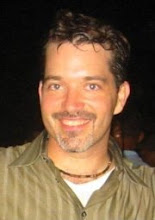
Foto tomada por Mónica López la noche del viernes, 25 de abril de 2025, en Nueva York, 14 años después de nuestro primer encuentro y entrevista en La Habana

En 2011, cuando las calles de La Habana tenían ese color de sol filtrado por historia y esperanza, Ted Henken llegó con una libreta abierta y una cámara encendida, pero sobre todo con el corazón dispuesto a escuchar. Fue uno de los primeros académicos estadounidenses en sentarse contigo no desde la distancia, sino desde el mismo banco, bajo el mismo cielo, con el mismo deseo de entender lo humano detrás de lo político. 

En su canal de YouTube (1 & 2), Ted registró esos encuentros como quien guarda fuego en una cajita de cartón: con cuidado, con cariño. Las entrevistas que te hizo no eran interrogatorios ni reportajes: eran conversaciones. Tú hablabas con ese estilo tuyo —medio filósofo, medio trovador— y él asentía, preguntaba, se reía contigo. Se hablaba de Cuba, del arte, del exilio interior, de las cicatrices que no siempre se ven, y de cómo la palabra puede ser resistencia, puente o bálsamo. 

Aquel diálogo no fue solo un testimonio público, fue un acto de complicidad. En un tiempo donde hablar claro podía costar caro, ustedes se regalaron el lujo de la franqueza. Y eso quedó grabado, no solo en video, sino en la memoria de quienes creen que la amistad también es una forma de activismo.

PARTE I

PARTE II

Nota: En abril de 2011, hice una visita a La Habana para entrevistar a blogueros cubanos. El 25 de abril, me encontré con OLPL en pleno Plaza de Armas de la Habana Vieja para hacer este par de grabaciones cortas porque Orlando no fue permitido salir para participar en un evento del Americas Society de Nueva York. 

Catorce años después, en la noche del 25 de abril de 2025, nos encontramos de nuevo en el apartamento que comparte en Manhattan con Mónica López para repasar nuestras memorias de aquellos días inolvidables. 

Resulta que - después de demasiadas copas de vino - a Orlando se le ocurrió pedir a la inteligencia artificial (AI) componer un resumen medio poético / medio cheo de nuestro primer encuentro.

Aquí arriba tienen el resultado!   

Wednesday, April 23, 2025

Sinning Against the Revolution or Sinning Against Journalism?


Last year I co-wrote the academic article “Diasporic Epistemologies in Cuban Independent Journalism” (Digital Journalism, February 15, 2024), with my colleague Sara García Santamaría. A few weeks ago, the college student Max Rhoads contacted me saying he had read it and was working on a term paper about the state of Cuban journalism and that he wanted to interview me.

Yesterday we did the interview.

Max kindly transcribed it and shared it with me so I could share it with you here!

Enjoy!

I gave it the snarky title:

"Sinning Against the Revolution or Sinning Against Journalism?
That is the Question!"

Interview of Ted A. Henken 
Professor of Sociology and Latin American Studies 
Baruch College, CUNY 
Conducted by Max Rhoads April 22, 2025

Max Rhoads: Before we start, would you mind introducing yourself? 

Ted Henken: My name is Ted Henken. I’m a professor of Sociology and Latin American Studies at Baruch College here in New York City, part of CUNY, and my specialty is Cuba. I’ve written a number of books about Cuba and done a lot of research about and in Cuba. 

MR: Thank you. My first question is can you briefly describe the state of journalism in Cuba, giving a rough overview. 

TH: The easiest way to think about journalism in Cuba is that it is basically divided into two parts. 

There is what you might call “official journalism,” that is controlled by the Cuban Communist Party, and essentially, that is propaganda that makes the party look good and tends to celebrate the system and the Revolution, and attack or show bad news about the rest of the world, especially the United States. 

Then there is a form of journalism that is the other half of the coin, which has different names. You could call it “alternative,” you could call it “non-state” or “non-official,” or you could call it “independent” because it’s independent of the government and the party. I call it independent journalism, although people have different names for it. 

And that journalism has existed for about 35-40 years, since the late 1980s or early 1990s, and today, it is maybe especially relevant, powerful, and important because of the access to the Internet that the world and Cuba has. 

MR: How much influence would you say the Cuban government has on its country’s journalism? 

TH: Well, you can extrapolate from the first answer I gave that the government tries to control the state sector, or the official journalism sector. First, because it has lots of influence and control over education. And then, almost all the media outlets, whether they’re newspapers or television stations or radio stations or magazines, are published and funded - and the people who work on them are paid - by the government. So, the government has a huge amount of control. That’s why I call it the “official media.” 

Of course, because any system that tries to absolutely control something will inevitably fail, and in the act of trying to control it, will alienate and push people to rebel, or to leave, or to quit, or to try to do something renegade. And so, it has very little control over independent journalism, that’s why we call it “independent journalism.” 

But there’s kind of a battle going on because independent journalism exists, but for a long time, it was hard for Cubans to read, or hear, or get access to what they produced. But that has changed. Every year, more people have access because there’s more general access via the Internet. But the Cuban government also tries to control that by harassing, repressing, jailing, and exiling independent journalists. So, it doesn’t control that, but it certainly tries to repress it. 


MR: In the paper you recently co-published with Sara García Santamaría, “Diasporic Epistemologies in Cuban Independent Journalism” (Digital Journalism, February 15, 2024), you wrote that most of the independent journalists weren’t completely against the Cuban Communist Party, but simply wished to express themselves freely. Could you say more about that, and do you have examples of the criticisms some of these journalists had? 

TH: The first thing I would say is that for various reasons that are quite complex, Cuban journalists try not to run afoul of the government. Partly because they don’t want to end up in jail or in exile. But also, in part, because, to a certain degree, they want to be neutral, or objective. That’s kind of an ideal in journalism. 

But also, they were raised, socialized, or even "brainwashed" to believe in the system, and in the Revolution. And so, it’s a complex mixture of self-preservation, opportunism, and belief. 

But in my experience, what happens then is that, once a journalist tries to establish some form of independence, even if the journalist avoids becoming anti-regime or a political dissident, the government sees almost any expression of independence as itself dissidence. 

And therefore, what happens is, when these journalists take a little step into the independent world, the government punishes them, threatens them, and they become more alienated, and they become less inclined to want to work with the government at all. 

And so, some of them just shut up and stop being journalists, but others become radicalized, and maybe more against the government. They may believe in some, or a lot of the ideals of socialism, but they also believe in journalistic independence, and in the truth, or in the facts, and the professional journalistic mission and ethos. 

But they realize - usually very gradually and through trial and error - that there is no coexistence. If they are committed professionals, then they’re going to sin against the Revolution, and if they are committed revolutionaries, they’re going to sin against journalism, so it’s really hard for them to be both. 

If they do real journalism, it will be interpreted as anti-government, because it won’t be controlled by the government. And so, it becomes almost like a snowball effect, where they become more and more alienated from the system, even if they started out from the idea that they were just going to do straight journalism or “periodismo y punto,” as the leading young independent journalist Carlos Manuel Álvarez told me was his original intention when he and some friends co-founded the digital magazine El Estornudo almost a decade ago, and not anti-regime, or political or dissident journalism. 

But one of the things that happens, especially to journalists is that - when we talk about classic liberal freedoms, one of those things is freedom of expression or freedom of speech… and when journalists try to practice those freedoms and are repressed, then by the very fact of them being journalists, they become activists for freedom of expression. Even if they don’t want to become activists per se. In the very fact of being journalists, they become activists, if only in the narrow sense of advocating for, and defending, and practicing independence and free thought and free expression (in the context of a dictatorship). 

MR: I’m aware there’s been a lot of laws that have been passed in the last few years limiting not only what journalists can say on the Internet, but also what Cubans as a whole have access to. So, have there been any new developments since you published that article last year, and if you published another paper on this topic, what would you want to include? 

TH: That paper is a snapshot from around the 2021-2023 period, but it does capture a kind of arc, and that arc is the development of independent digital journalism, and at the same time, the tragic exile of most independent journalists, and that’s why the paper focuses on the “digital diaspora.” 

As we say in the paper, many of the people who we focus on lived in Cuba when we started writing the paper, but by the time the paper came out, they were almost all gone. So that tells you what’s happening. 

There are two things I would say that are new, or interesting, or different, that aren’t in that paper, maybe, or aren’t emphasized in that paper. 

(1) One is that this is a song that has been on repeat for 60 years. Meaning that, because the Cuban government controls history, and disposes of history it doesn’t want people to know about, every generation has to relearn the lessons that were learned by the previous generation. 

Because the people who went through that - the last generation - they’re in jail, they’re dead, or they’re in exile, and you don’t have access to their stories. So, you have to learn the hard way what they learned 10, 20, or 30 years before. And that is that, in trying to create a “revolutionary journalism,” the Cuban government created a propaganda arm of the Party that just told it what it wanted to hear, and didn’t do journalism. 

And then people who tried to do actual journalism “within the revolution” were often thrown under the bus, into prison, and/or driven into exile, and then that would happen again and again and again. 

So, the things that have happened to this new generation of digital journalists, even though the context is new because it’s the digital world where you can do this kind of stuff because of the Cloud and because of access to the Internet, and things aren’t just published in paper anymore, they’re digital, online… But you still have the same series of steps that the government will take against people in progression: 

First, they try to socialize them and control them through their mind and through their job. 

Then, if they step out of line, warn them. Then, if they keep stepping out of line, raid their house, threaten them with jail, threaten their family, claim that they are paid by the CIA or they are working for other anti-Cuban interests. 

And then put them in jail and send them into exile or both. And this cycle repeats itself. 

It’s kind of like The Book of Ecclesiastes from the Bible: “There’s nothing new under the sun.” 

(2) The other thing that I would say is that, yes, in the past five years, the government has kind of woken up and tried to arm itself legally to have the laws in the books to punish speech it doesn’t like that is on the Internet. And so, there are five or six recent laws, or policies, or things that have been passed that simply give it more legal cover to do what it has always done, but now on the Internet. 

So, we could highlight some of those… and there are a number of them. But maybe it doesn’t make a whole lot of sense to get into the details, because they’re all basically the same thing, which is: 

Be careful of what you write on the Internet because there’s a sword of Damocles over your head, and at any moment, you could be harassed or formally charged and sent to prison, so stop doing it or leave the country. 

MR: I know you said this has been an ongoing battle for the last 60 years, however, would you say this repressive climate started with Castro, or were there stepping stones to it? Was there a set path to it? 

TH
: Well, Cuba has never been totally free, open, and democratic either in government or journalism. What I mean is that there have always been problems or obstacles or censorship or control of the media. 

I think the biggest difference, however, is that, before Castro, the media was mainly controlled through carrots, meaning that the government bribed lots of journalists and newspapers and magazines, paid them off. They basically used money as a carrot to incentivize good coverage. 

It was basically a corrupt system, but at the same time, it was a system that was extremely rich in the number of newspapers and magazines, and the rich diversity of ferment and thought and debate within the various newspapers. There was a Communist newspaper, there was a right-wing newspaper, there were all these different things. 

Now of course, at different times, depending on what was happening politically or militarily, they might be shut down, or clandestine, or other things… I’m writing a book about all of this. I have a whole chapter that tells the story of what the media was like under the previous dictator, Fulgencio Batista. But I would say that generally, there was censorship that was mainly through the carrot, but sometimes through the stick. 

Whereas under Castro, it’s really an environment of a different kind, because it is an attempt to monopolize totally the official story and demonize anything that’s outside of that through the closing down or the taking over of all media, so that there is no private media or independent media, there’s just a government truth and a “revolutionary” media. 

So, it’s a radical shift because it goes from a free system that is corrupt and has lots of censorship to a system of state propaganda. That’s what I would say is the main difference. 

There are stories that you could tell, and that are told, about various currents within the Revolution that tried to have a modicum of independence, a modicum of criticism, that are noteworthy and important. But they’re all existing within a media landscape where there’s a will to almost absolutely control communication and information and it was achieved for almost 40 years (1959-1995) but has broken down significantly over the past 30 (1995-2025). 

MR: And that brings me to my last question: where do you see Cuban journalism in five years? Do you think it’s going to get any better, or do you think the government is going to respond with increasing repression? 

TH: Well, I don’t think that we can expect anything on the part of the government that would make things better. There’s no chance of that, or almost no chance of that. 

I would say that a couple things are promising and a few others are threatening. There’s an article that I wrote - it’s published in Spanish - called “Independent Digital Cuban Journalism: The Best of Times and the Worst of Times.” 

In it, I discuss how there has been a true BOOM in the number, diversity, and professionalism of all these independent digital media outlets that are Cuban, that are now mostly run from outside of Cuba, but most of which were founded within Cuba. Now, given that their founders have been living in exile, many of the newsrooms are multi-located, meaning that there are people who live in Miami, Madrid, and Mexico City, and wherever else, and they all work together, in the same virtual newsroom. 

The other thing that’s really important about all of these organizations is that they have an increasing and now majority readership in Cuba. Before, when they started out, most of the people who read them were outside of Cuba. Now, between 60% and 80%, maybe even 90% of their viewers or readers are in Cuba. 

Turing to “the worst of times,” there are two or three things that I would say about that: 

One is, of course, that repression and exile have continued. The government has continued to repress, so almost none of these outlets - although most of them were founded in Cuba - still have the main people who run them in Cuba anymore. So that’s the first thing: repression and exile are now the rule and not the exception. 

And then there are two other things that are interesting and fascinating, and maybe very sad, but important. 

(1) One is that we live in the “post-truth Trump era.” Of course, it’s not all Trump’s fault, but I’ll label it with his name. What I mean is that one of the great and terrible things about the Internet is that anybody can say whatever they want. But journalism isn’t about anybody saying what they want. Journalism is about somebody who is a trained professional with a set of ethics and a systematized way of working that tries to get to the truth in a responsible way, not to get clicks and likes and followers. 

The democratization of the media because of the ubiquity of the Internet and the potential of turning everybody not just into a consumer but also a producer, is on the one hand great, but on the other hand terrible. 

There was a book that came out almost 20 years ago in 2007 that warned about this problem. It was called “The Cult of the Amateur: How Today’s Internet Is Killing Our Culture” by Andrew Keen. The idea of the book is that the democratization or “amateurization” of the media is - which was thought to be a benefit for journalism – has turned out to be a major even mortal threat to it. 

Yes, in places like Cuba, people who aren’t part of the system can tell the truth when the system is lying. But in places like the United States, or anywhere else in the world, anybody with whatever agenda, with some or even almost no knowledge of the Internet and some money, can spread lies, disinformation, misinformation, innuendo, and you’ll have an audience, and maybe that will be a significant audience where you sow doubt and confusion. 

That’s a big problem. And it’ll just continue to be a problem for Cuba, because it’s a problem for everybody. 

And some of these very heroic independent Cuban journalists, they’re part of an ecosystem that has YouTubers, and influencers and those YouTubers and those influencers, and that ecosystem has that whole irresponsible celebrity tendency that the whole world has that pays more attention to flash than fact. And so that’s problematic. 

(2) The other problem that’s also ironic in this case that Cuban journalism is facing is based on the fact that a good part of independent Cuban journalism has always found support abroad. Meaning that either the United States government, or some entity that’s funded by the United States government, or some entity in a third country, whether that’s Holland or the Czech Republic or Norway, would be interested in supporting independent voices around the world, including in Cuba, and would help either train, or fund, or finance, or support in a lot of different ways independent journalists. 

Now this was necessary, and is necessary for a lot of reasons, but it has two big problems. 

(a) One is that the government of Cuba can then argue that these people aren’t independent, they’re working for someone else abroad. They’re mercenaries, essentially, is what the government says. They’re working for the money, “the Yankee dollar” or whatever. While that’s generally just manipulation and propaganda, that is an argument that sometimes convinces people. 

(b) The other problem is that, if any of these independent, or non-state media platforms becomes too dependent on foreign support in their business model, if that foreign support disappears, they have to close down. So, because of Trump’s policy, that is being implemented through DOGE and Musk, to radically cut government spending and especially support for any kind of international aid, there’s been a tremendous hit to independent or non-state Cuban journalism. 

I have a friend, the editor-in-chief of a leading independent news outlet - who describes it as a “mass extinction event,” like a meteor hitting independent Cuban journalism, because so many of the independent media outlets were partly dependent on support from the US government in one way or another, and have had to either close down or radically cut back on their work. 

And so, I would say that, the amateurization of journalism because of the digital media world we live in on the one hand, and this issue of over-reliance on foreign support, are two things that will be issues going forward.

Friday, April 11, 2025

The Danger of Thinking and Loving: Yndamiro Restano and the Birth of Independent Journalism in Cuba

El Yuma with Yndamiro Restano, June 30, 2023, Miami.
Photo by Amparo López Pujol

"La prensa independiente sirve para sacar a la luz lo que las ideologías ocultan.” -Yndamiro Restano – October 31, 2022

The humble beginnings of Cuba’s now surging, decidedly digital, and transnational movement of independent journalism date to an otherwise unexceptional April morning in 1985. 

That day, a 36-year-old reporter with Radio Rebelde named Rolando Yndamiro Restano Díaz who covered the agricultural beat for the renowned station (first established by Carlos Franqui as the clandestine arm of the July 26th Movement in the late 1950s) took out his trusty Underwood typewriter and produced what would become the island’s first independent newspaper. It was a handmade broadsheet just a single-page in length emblazoned with the heading, Nueva Cuba. 

Restano – who died in exile in Miami earlier this year where I met and interviewed him in June 2023 - normally used Yndamiro as his first name. That April morning, Yndamiro laboriously typed out 50 identical copies of the missive and distributed them up and down the streets of his Vedado neighborhood in Havana with one ending up pinned to a wall in the famed Coppelia ice cream parlor at the crest of the La Rampa shopping district in the heart of the Vedado business district. 

At this early stage, however, Yndamiro had no intention of criticizing Fidel Castro’s government itself, starting a dissident movement, or much less calling for wholesale regime change. Instead, he sought to share what he considered vital information about the disturbing realities of Cuba’s wasteful and woefully inefficient state farms systematically censored by the official press and hidden from view by the powerful bureaucrats who oversaw such farms. 

Believing that access to such information was not only a public right but also an essential antidote to the many bureaucratic errors (or worse) committed in secret, Yndamiro thought that the light of day and the exposure to public opinion might help remedy such abuses. As a journalist, he also believed that it was his professional duty to report on these issues. 

Much like what life-long journalist Reinaldo Escobar would also attempt to do from the pages of Juventud Rebelde in the coming years (1987-1988) before being unceremoniously sacked himself, Yndamiro was animated by the hope of producing what he thought of as a truly “revolutionary” form of journalism that would expose what was not working in Cuba’s socialist system so that it could be “rectified.” Also, like Reinaldo, at this stage Yndamiro thought that Cuba’s problems arose from an incorrect application of the doctrine of state socialism and not from an inherent, fatal flaw in the system itself. 

Finally, he shared Reinaldo's ultimately dashed hope that a Cuban-style “rectification of errors” (declared as state policy by Fidel Castro in 1986) would emulate the policies of glasnost and perestroika then gaining steam in the Soviet Union instead of closing ranks and guarding against them – as turned out to the be the case. 

In other words, Yndamiro did not set out to become a political dissident in his valiant if quixotic launch of Nueva Cuba but an independent journalist. His aim was not only to break away from the propagandistic straight-jacket of the official media but also to avoid any blanket condemnation of the Revolution to which he and at least three generations of his family had dedicated their lives. 

But in this he turned out to be sorely mistaken and more than a little naïve. Indeed, instead of provoking a critical and corrective investigation of the mismanagement of state farms, Yndamiro’s unauthorized circulation of his mimeographed broadsheet – outside the strictly controlled official media system – unleashed the full force of Cuban state security against him. 

However, Yndamiro was not content to publish his independent journalism abroad in German or English translation (as Reinaldo was beginning to do at this time). Indeed, his insistence on self-publishing his exposé and having it circulate within the island for a Cuban audience forced him to quickly face the fact that in the eyes of the island’s Gestapo-like security enforcers independent journalists and political dissidents are one and the same. 

This same lesson would be hard-learned by all future generations of “renegade” journalists who dared to break out of the official state media monopoly and launch their own independent journalism projects.

***

The above narrative of Yndamiro Restano’s personal background and activities as a pioneering Cuban independent journalist forms the introductory section of a full chapter I have written about Yndamiro's essential contribution to kickstarting the rebirth of the free press in Cuba between the 1985 self-publication of Nueva Cuba and his 1995 exile (a trajectory interrupted by the three-and-a half years he spent in jail in Cuba as a political prisoner as punishment for his independent "thinking and loving"). 

The chapter is part of a larger book I am working on about the independent journalism movement in Cuba over the past half-century and is based on various interviews I conducted with Yndamiro by telephone and in person between 2021 and 2023. I thank Amparo López Pujol for her help in facilitating those interviews and for providing me with other background information on Yndamiro's impactful life and career. 

If you want to learn more about Yndamiro and can't wait for the publication of my book (!), key sources that have proven vital in my reconstruction of this all-important decade in Restano’s political and professional trajectory (1985-1995) include Reina (1995), Bilello (1997), Mari (2006), García (2017), and especially Beaulieu (2014). Restano’s own “Testimony of an Independent Journalist,” originally published in El Nuevo Herald in May 1996 and later included in the book Desde Cuba con valor (Editorial Pliegos, 1997), has also proven very useful. 

Friday, April 4, 2025

"Havana: The Forbidden City": The first thing I ever published about Cuba (spring 1998)!

It has been almost five years since I last posted anything to my blog, "El Yuma." 

As you can see below, that was a post on November 1, 2020 (en plena pandemia y campaña electoral norteamericana), entitled, "Trump: Elections, What For?" 

Can anyone spot the historical reference in my snarky title?

Well, we know how that went... 

While I can't promise that I will be back to blogging on as regular a basis as I did back between 2009 and 2014, I do think that getting off of Facebook (and other social media sites that I will not mention here) in order to post things of a bit longer, more reflective nature, can be good for us at this time. 

So... 

As the title of this post suggests, here I'm sharing "the first thing I ever published about Cuba." 

I found it as I was rummaging through some old files. I wrote it 27 years ago (!) in the spring of 1998. 

It's a 3-page reflection I published in the Curriculum Resource Center Newsletter of the Roger Thayer Stone Center for Latin American Studies at Tulane University (where I was then a graduate student) about my first ever visit to Cuba for three weeks in the summer of 1997. 

Enjoy and I'd love to hear feedback from anyone who takes the time to read it. 

I'm especially curious to hear if my impressions of Cuba at time (1997) jibe with your own and how it sounds to you now 27 years later. 

It is available here as a PDF and below in photo format (if you click on each photo you will get a more legible version).

Sunday, November 1, 2020

Trump: Elections, What For?


"We’re going to have to see what happens" was the response of President Donald Trump on September 23 when asked if he would accept the result in the November elections. This is the same defiant stance he held during the first presidential "debate" on September 29 when Chris Wallace asked him if he was committed to a peaceful transition of power.

Trump responded by questioning the legitimacy of the election based on alleged fraud in mail-in ballots and encouraged his supporters to go to the polls as "observers" to verify the integrity of the vote. This translates into a strategy of intimidation of his opponents and voter suppression, or simply an effort to discourage citizens from participating in a process declared shady before it even begins.

Perhaps with the increasingly clear awareness that he is highly unlikely to win “fair and square” based on the popular vote or the Electoral College, his strategy is to sow distrust over the results. He also said in the debate that he was counting on the possible intervention of the Supreme Court to grant him victory after bringing the electoral process to litigation. And during Senate hearings on her nomination to the high court, Judge Amy Coney Barrett refused to say whether she would recuse herself from potential cases related to the November election if she is confirmed.

I am hopeful - and confident - that Biden and Harris will emerge victorious after all the votes are counted given their wide lead both nationally and in many key swing states through November 1. But from his most recent statements and as well as from other public statements via Twitter, I am anything but confident that Trump will accept an electoral defeat. Actually, I fear that his obstinacy could very well produce a constitutional crisis in the weeks following the November 3 election.

If Biden doesn't win by such a substantial margin that he can be declared the winner on election night, perhaps the most likely and terrifying scenario is that Trump will declare himself as such with only the votes already counted. This would happen before the mail-in ballots are recorded - and given the continued threat of the pandemic, such voters promise to be more numerous than ever this year. In such a late “blue shift” scenario, Trump and his supporters would accuse Democrats of fraud and turn to the Supreme Court and Senate (and the National Guard?) to intervene on their behalf.

Source: Geoffrey Skelley
https://fivethirtyeight.com/features/why-pennsylvanias-vote-count-could-change-after-election-night/

Indeed, this is exactly the scenario that Trump senior advisor Jason Miller attempted to pass off as normal in an appearance on ABC News' "This Week" on Sunday, November 1. 

"If you speak with many smart Democrats, they believe that President Trump will be ahead on election night, probably getting 280 electoral [votes] somewhere in that range, and then they’re going to try to steal it back after the election. We believe we will be over 290 electoral votes on election night, so no matter what they try to do, what kind of hijinks or lawsuits or whatever kind of nonsense they try to pull off, we’ll have enough electoral votes to get President Trump re-elected."

This is not how elections work in the United States of America! 

No state certifies final results at midnight on election day and all states will be counting legitimate votes well after then.

Source: Geoffrey Skelley
https://fivethirtyeight.com/features/why-pennsylvanias-vote-count-could-change-after-election-night/

The threat that Trump represents to American democracy should provoke chilling memories in Cubans (both on the island and in the diaspora) if we recall three facts from their own history:

(1) the chronic electoral sabotage practiced by the presidents in power during the Republic (1902-1958) who always put their own political and economic interests (and those of their parties) above national interests,

(2) the demonization of the independent press and other institutions of civil society by the Castro regime now for more than half a century, and

(3) the cult of the personality built around the messianic figure of Fidel Castro, which made it easier for him to declare (and for the majority of Cubans to accept) with absolute anti-democratic demagoguery: "Elections, what for?"

In the years since his 2016 election, Trump has systematically politicized or worked to delegitimize the key institutions for democracy in the United States, now including the presidential elections themselves.

Using his own words ("We're going to have to see what happens"), Trump is repeating the same demagogic message that Fidel Castro sounded so ominously and to such disastrous effects so many years ago.

Are we listening? Are we prepared to resist?


Note: An earlier version of this post was published as part of a dossier on the 2020 US election and Cuba in Hypermedia Magazine.

Saturday, December 15, 2018

Carlos Acosta's 2007 memoir is titled "No Way Home" but with the 2018 film "Yuli," he may just have arrived!

On a trip I made to Havana just over 10 years ago in the summer of 2008, I attempted to track down and interview Cuban ballet sensation Carlos Acosta, the author of the deeply moving and personally revealing memoir, No Way Home. Though Acosta then lived most of the year in London, a mutual friend had given me his Havana address and tipped me off that he was then visiting his family there. After making my way under Havana’s scorching sun to his newly renovated Nuevo Vedado house, I was greeted at the doorway by one of his associates and led through an elegantly shaded patio into the tastefully decorated front room of his spacious home.

Disappointed to learn that Acosta was not in, I proceeded to leave my business card with the hope that we could meet later. However, before turning to leave, my eyes finally adjusted to the muted light inside the cool, dark living room and I suddenly realized that sitting directly in front of me in a wooden rocking chair was an impossibly old, rail-thin, charcoal black man who could be none other than Acosta’s father Pedro.

Photo of Pedro Acosta by Ted A. Henken.
Not wanting to pass up the opportunity to talk with the man who was surely Acosta’s greatest single influence (if often vividly described in the book as a fierce disciplinarian), I quickly introduced myself saying how I felt that I already knew him through having read his son's memoir.

“You must be very proud of Carlos’s accomplishments and happy that he thought to dedicate his memoir to his family, even singling you out as, ‘one of the greatest men I have ever known’,” I asked.

At this, 90-year-old Pedro did not respond but instead began to smirk at me. Taking note, I jokingly reprimanded him, saying, “Your son has achieved great things but don’t you think you were just a little too harsh on him all those years, always telling him to forget his home and family and focus only on achieving his goals as a dancer?”

As I said this, the smirk on his face slowly grew into an electric, ironic grin, as he leaned back comfortably in his rocking chair and spread his arms out wide as if to say, “Nothing in this life comes without hard work and sacrifice. Look around and you can see, at long last, the result.”

***

What follows below is the book review that I wrote following that visit. It was first published exactly 10 years ago in The International Journal of Cuban Studies (Volume 1, Issue 2, December 2008). I'm republishing it here since few people ever read it then in that low circulation, hard to access academic journal (!) and also because I recently looked it up in the archives of my laptop and reread it given that it is the basis of the new film "Yuli" (directed by Spaniard Icíar Bollaín and staring Acosta himself), which just premiered in Cuba at the International Havana Film Festival.


One major, bitter irony is that while the film did premier in Havana this month, the book on which it is based has never been available to Cubans on the island - still 11 years after it was first published to rave reviews in Europe. For more on that controversial saga, see this excellent article from Havana Times by Maykel Paneque, "Cuban Dancer Carlos Acosta in the World of Alicia Alonso."

***

Carlos Acosta. No Way Home: A Dancer’s Journey from the Streets of Havana to the Stages of the World. New York: Scribner, 2008.

First published in the United Kingdom in 2007 under the title, No Way Home: A Cuban Dancer’s Story (and translated from the original Spanish by Kate Eaton), Cuban ballet sensation Carlos Acosta’s deeply nostalgic autobiography was released in the United States in May, 2008, with the subtitle, A Dancer’s Journey from the Streets of Havana to the Stages of the World. This dramatic new subtitle of the American edition captures Acosta’s successful journey from poverty and obscurity on the outskirts of revolutionary Cuba’s capital to wealth and fame in cities as diverse as Milan, Lausanne, Houston, Tokyo, Paris, Moscow, New York, and London. However, the underlying message of his engaging and intimately reflective coming-of-age story is more accurately captured by its heartbreaking, three-word title, No Way Home.

Though there does not yet seem to be a Spanish language edition of Acosta’s memoir in print, “No hay regreso” is the way a Cuban might translate No Way Home.

[Note: There is now an Amazon digital Kindle edition of the book available in Spanish. Entitled, Sin mirar atrás: La historia de un bailarín cubano, this Spanish language edition is being published or re-published - it seems - to coincide with the release of the film "Yuli"]

For example, the slang Cuban expression “no tiene regreso,” is frequently used among Cuban émigrés in the United States to describe someone for whom the experience of exile has been so harrowingly transformative that the person in question “can never go home again.” Since, as with Acosta, even if they do make it home again physically, home is no longer the home they left behind, and they are not the same person they once were. Thus, while Acosta’s rags-to-riches story abounds with the many details and dilemmas specific to the Cuban diasporic experience and to his own impoverished Afro-Cuban family background and revolutionary generation, it is his constant focus on the personal and emotional price of his success and his tragic inability to ever fully recover the past – to ever go home again – that makes his tale a compelling, universal one.

Throughout the book, the portrait Acosta paints of himself is that of an insecure and almost paralyzingly lonely boy from the wrong side of the tracks who succeeds in turning himself into a world-class dancer and a confident and accomplished young man. However, in order to reach his artistic destiny, he must first pass through an often awkward and solitary adolescence, endure his father’s strict discipline and emotional impenetrability, abandon his childhood dream of being a football star like his hero the famous Brazilian Pelé, and slowly loose touch with that part of himself he most values: his easy intimacy and emotional connection to his family. However, while he succeeds in this Herculean task through a combination of raw talent, an iron will power and work ethic, making the best of revolutionary opportunity, and the loving if often insensitive guidance of his disciplinarian father, each success only serves to make him ever-more aware of the bitter price of his ticket to fame.

Despite his steadily increasing success, Acosta’s battle against insecurity and nostalgia continues to haunt him well into his professional career. At one point toward the end of his first year as a dancer in the Houston Ballet, Acosta finally figures out the source of the anxiety that had been plaguing him. Since arriving in the U.S., he had managed to make good friends, achieve professional success, and even fall in love. However, he had not succeeded in pushing out of his mind his deep, almost suffocating fear of living a life without roots. Suddenly, with his defenses down and his nostalgia on the rise while watching the Gregory Nava film, “Mi Familia,” about the hardships endured by multiple generations of a Mexican immigrant family, Acosta is overcome by “a terrible fear that […] I would be a foreigner for the rest of my life.” As a result, he resolves to abandon his promising career abroad and return to the familiar and protective cocoon of his family in Los Pinos, the humble Havana neighborhood where he grew up.

Each of the numerous times Acosta comes to this decision, however, he is rebuffed by his father, who repeatedly gives him the stern advice, “The only way you’re going to help your sisters, your mother, and all of us, is by being the best dancer you can be. […] Forget about everything else and concentrate on your career. It’s not only what you owe yourself, it’s what you owe us, the ones who didn’t have the luck to be born with your talent.” Later, his father advises him, “Don’t give in to nostalgia. Forget everything. […] Men are born into the world to fulfill their destiny, and yours isn’t here. We’re the ones who were born to live and die in Los Pinos. Your future lies elsewhere. However much you want to, […] never look back.”

Toward the end of his tale and during a particularly wrenching family crisis when his sister has attempted suicide due to her chronic suffering from paranoid schizophrenia, his father makes him promise to follow the path of “great men” and never be distracted from achieving his goals. Though Acosta manages to keep this promise to his father, he later tearfully rebukes him after Pedro tries to convince him that the fate of great men is to “belong to the world,” arguing, “Your art is your house, my son.” Carlos agrees that his success has assured him that he will have many fine houses [much like the largely empty one in Nuevo Vedado where I met his father], but he says, “all I really wanted was a home.” However, his years of travel plagued by chronic nostalgia have only taught him the bitter lesson that “a house is not a home.”

That his struggle is as much an emotional one against the ghosts of his past as it is an artistic one to master the proper techniques of classical ballet is most clearly expressed late in the book when Acosta has a chance sighting of Baryshnikov while performing at a benefit in New York City in 1996.  Instead of praising him for his signature artistic achievements, Acosta admires and identifies most closely with Baryshnikov for “the courage he showed in swapping the certainty of his old life for the uncertainty of a new one, knowing that by doing so he could never go back.”

Thus, for Acosta, Baryshnikov is both an artistic muse and an emotional mirror – a reflection of his own inner turmoil over what he had to leave behind to fulfill his destiny. Others marvel at the outer trappings of Baryshnikov’s success. Acosta marvels at the inner triumph of spirit few others can see, since few others but he have experienced it personally. Later that same day, when observers see Acosta dance, they marvel at how he is “Just like Baryshnikov!” However, for Acosta, his most important similarity to the great Russian dancer is not in their accomplished interpretative ability or seemingly effortless technique, but in the fact that they are both permanent foreigners, always exiles, “not afraid to burn [themselves] in [their] efforts to reach the sun.”

One minor, frustrating shortcoming of the book is Acosta’s decision in a number of instances to share with us only part of his story – perhaps with the calculated aim of preserving his tenuous ability to periodically return to his homeland and see his family. While the book is clearly more of a personal and artistic memoir than a political one, when Acosta does touch on political matters his opinions and criticisms of Cuba’s authoritarian system (and the authoritarian functioning of some of its cultural institutions) are more often implied than clearly stated.

For example, in a chapter dedicated to one of his mentors, Ramona de Sáa (known to all by the nickname Chery), Acosta celebrates her brave decision to arrange his contract with the English National Ballet without the prior approval of the Cuban authorities. As a result, “When Chery got back to Havana, she was accused by the directorate of the Cuban National Ballet of acting irresponsibly by exposing me, so young, to the brutalities of capitalism. Her detractors said I would be sure to undergo an irreversible ideological subversion and that foreign influences would undermine my Cuban identity.” While Chery ultimately prevailed over her detractors with her reputation intact, Acosta’s description of this episode shows his preference for oblique sarcasm and satire over direct criticism and denunciation.

This tendency is even more evident in Acosta’s descriptions of his relationship with the most important and powerful figure in the history of Cuban ballet, Alicia Alonso. “Alicia is a legend,” Acosta writes, “she is a figure of such importance that her power could be compared to that of the president. One word from Alicia can change your future.” While Acosta is careful never to openly criticize such a concentration of power in a single person, he does make clear that his future, like that of all Cuban ballet dancers, rests in her hands.

In one particular instance, for example, he must gain her blessing before signing a contract to dance with the Houston Ballet. However, his cryptic and abbreviated description of this tense, life-changing meeting only hints at Alonso’s haughty, belittling bearing and thinly-veiled racism, leaving the reader confused and unsatisfied. But, alas, cryptic communication and self-censorship among artists and intellectuals is one of the pernicious hallmarks of the Cuban Revolution's infamous "Política Cultural," first established by Fidel himself in his 1961 "Words to the Intellectuals."

In the end, even as Acosta’s beautifully written memoir recounts his professional development and mounting artistic success, it succeeds as a powerful work of autobiography because it does so through the prism of the personal sacrifice, emotional trauma, and almost paralyzing loneliness that accompany him, haunting every step on his journey. Again and again throughout his Horatio Alger (Billy Elliot) tale, Acosta finds that his artistic achievements are often overshadowed, very nearly eclipsed, by an almost palpable, aching nostalgia.

While standard-fare memoirs of “escape” from Cuba often suffer from the facile assumption that all good things go together and are available only beyond the shores of this poor, “imprisoned” isle, Acosta’s memoir succeeds due to its commitment to painting a fiercely honest, personally searing, and politically complex portrait of his homeland where success beyond Cuba is always paid for with a deep sense of loss and gnawing nostalgia for what was left behind – the life taken from you, the life you did not get to live.

In Acosta’s case, this nostalgia is for his rough-and-tumble yet dignified, idyllically remembered childhood; for his sense of belonging and rootedness in his homeland; and, most importantly, for the closeness and intimacy of his increasingly distant, conflict-ridden, and tragedy-prone family.

*Copyright for this work is held jointly between Ted A. Henken and the International Journal of Cuban Studies under a Creative Commons, Attribution-NonCommercial-No Derivative 3.0 License http://creativecommons.org/licenses/by-nc-nd/3.0/   

*An earlier version of this review was published in IJCS, Volume 1, Issue 2, December 2008.

Friday, July 7, 2017

Cuba: Navigating in a Turbulent World

Cuba: Navigating in a Turbulent World


FOR IMMEDIATE RELEASE​

Contact:  Blanca Silva

786-493-7210

blancaesilva@bellsouth.net


ASSOCIATION FOR THE STUDY OF THE CUBAN ECONOMY 

TO HOLD 27th ANNUAL CONFERENCE 

"Cuba: Navigating in a Turbulent World" Taking Place at Downtown Miami Hilton July 27-29


Miami – July 7, 2017 – The Association for the Study of the Cuban Economy (ASCE) will hold its 27th Annual Conference at the downtown Miami Hilton (1601 Biscayne Boulevard) July 27-29. Titled "Cuba: Navigating in a Turbulent World," the three-day event will focus on evaluating the state of the Cuban economy, taking into consideration the impending changes in Cuba's relations with the United States. The conference program will feature scholarly individual presentations and roundtable discussions by world-class experts, including specialists from the island. 


"With Venezuela's collapsing economy, one of the key issues to be discussed at this year's conference is the future of Cuba without Venezuelan trade and subsidies," says Helena Solo-Gabriele, Ph.D., ASCE president and an engineering professor at University of Miami. "Another key issue is whether Cuba will implement the economic reforms needed to stimulate the private sector and attract foreign investment to spur economic growth."


​Cuba's dual currency system, current economic policies, and prospects for future growth and change will be covered at the conference, together with social and legal issues related to the economy. This year, there will be two sessions dedicated to legal issues in Cuba titled "Foreign Investment in Cuba:  Law, Policies, and Practicalities" and "Coordinating U.S. and Legal Principles to Resolve Property and Damage Claims."  Continuing law education credits are available for both sessions.  Additional topics include tourism, real estate, and agriculture. 


An impressive roster of presenters who have been chosen based on the quality of their paper submissions include keynote speaker Marc Frank, a journalist working in Havana for Reuters and "Financial Times," and author of "Cuban Revelations:  Behind the Scenes in Havana."  Others include faculty from many esteemed universities in the United States and experts from the International Monetary Fund, World Bank, U.S. Department of Labor, and U.S. Department of State.  


Special guest presenters who will be able to travel from Cuba include leading economist Omar Everleny Pérez Villanueva who will speak about economic anticipations on the island; intellectuals Dagoberto Valdés Hernández and Yoandy Izquierdo Toledo, both from Centro de Convivencia, who will speak about Cuba's education system and its impact on the economy; Dr. Alina Lopez Hernández, a philosophy professor and essayist, who will speak about the realities of the Cuban economy; top journalist Ernesto Perez Chang of Cubanet News who will speak about journalistic interpretations of Cuba's economy; Dr. Olimpia Gómez Consuegra, an agricultural engineer and a member of the Cuban Academy of Science until 2011 who will participate on a panel about agriculture; Laritza Diversent, a lawyer, independent journalist and human rights defender who will discuss the struggle to establish independent civil society organizations; and Joanna Columbié, an activist with Academia del Movimiento Politico Somos + who will also touch on the struggles of independent civil society. Sessions by these guest presenters will be conducted in Spanish.


"We aim to gauge the state of the Cuban economy with scholarly discussions and research where the participation of intellectuals in Cuba is very relevant," said Solo-Gabriele. "With this valuable exchange, we are creating a rich body of knowledge that supports ASCE's mission of promoting scholarly discussion on the Cuban economy."


In addition to scholars and professionals, the conference will feature a graduate and undergraduate student panel with papers addressing Cuba's housing sustainability, the influence of foreign policies, and even the influence of foreign fashion on the Cuban identity. Student papers were judged by a panel of experts and the winning students will receive a modest scholarship award plus travel funds to participate in the conference. These students are represented internationally from the U.S., the Netherlands, and Belgium.  


"We are very appreciative of the financial support received from the Christopher Reynolds Foundation for the student paper competition and the Cuban scholar travel plans," says Solo-Gabriele.


"Cuba:  Navigating in a Turbulent World" will open on Thursday, July 27th with two plenary sessions after an 8 a.m. breakfast; concurrent sessions will follow lunch and will dominate the Friday and Saturday programs. While a cocktail reception will take place on Thursday after the conference, an ASCE business meeting will be held on Friday at 6:45 p.m. The event closes on Saturday at 12:45 p.m. with two concurrent sessions. For more information on this conference, go to www.ascecuba.org. To register, go to http://www.ascecuba.org/2017-asce-conference-registration-form.


The Association for the Study of the Cuban Economy (ASCE) is a non-profit, non-political organization incorporated in the state of Maryland in 1990.  With members from the US, Latin America and Europe, its mission is to promote research, publications, and scholarly discussion on the Cuban economy in its broadest sense, including on the social, economic, legal and environmental aspects of a transition to a free market economy and a democratic society in Cuba.  ASCE is committed to a civil discussion of all points of view. Affiliated with the American Economic Association and the Allied Social Sciences Association of the United States, ASCE maintains professional contacts with economists inside Cuba –whether independent or associated with the Cuban government-- who are interested in engaging in scholarly discussion and research. 


Salaam Alaikum, Ted

Saturday, June 17, 2017

Así comienza el día...

At 9:42 a.m. yesterday almost 4 hours before President Donald Trump took the stage in Miami's Little Havana a good friend of mine got this cancellation for her BnB across the waters in Old Havana. 

Tell me again how the new Trump-Rubio-Díaz-Balart measures will help Cuba's cuentapropistas?


Join me on a completely legal group P2P trip to the new #Cuba!

Dear friends,

If you want to know my take on the new Trump Cuba regulations you can check out my Facebook or Twitter timeline (@elyuma).

However, after reviewing those new regulations I realize that he and Marco Rubio just threw some new business my way!

I was already scheduled to be the on-board educator for a 10-day people-to-people educational and cultural cruise to Cuba in late December. The Trump policy ratifies the basic legality of those trips, so contact me if you want to join.

E-mail: YumaTed@gmail.com

Additionally, I'm scheduled to lead a group people-to-people tour to Cuba in early January. We currently have 6 travelers but given the fact that by then individual people-to-people travel will be outlawed, I realize we may get a surge of interest in joining our fully legal group visit.

So contact me if you're interested in joining me and our other happy travelers. 

E-mail: YumaTed@gmail.com

Rest assured that every effort will be made to spend our hard earned currency in private sector establishments (including private BnBs and paladar restaurants) which has been my policy for > 20 years now. 

¡Que vivan los cuentapropistas!

Friday, June 16, 2017

CubaOne Statement on President Trump’s Cuba Policy


​

CubaOne Foundation: President Trump's Cuba Policy is Largely Consistent with Our Recommendations


MIAMI—Earlier this week, the CubaOne Foundation, the Miami-based nonprofit that sponsors heritage visits to Cuba for young Cuban Americans, sent President Trump and his National Security Council a letter urging him to pursue a pro-family Cuba policy. Our letter made six key recommendations:

  1. Promote America's Commitment to Human Rights

  2. Affirm the Rights of Cuban-Americans to Visit and Help Family in Cuba

  3. Encourage U.S. Travelers to Support Cuba's Private Sector

  4. Engage the Cuban Government to Lower its Passport and Visa Fees

  5. Maintain the U.S. Embassy in Havana

  6. Support Cuba's Entrepreneurs, Youth, and Access to Technology

We look forward to seeing the final details of the President's policy, but our initial assessment is that it is largely consistent with our recommendations to the White House.

We thank the President for recognizing the rights of Cuban Americans to freely visit and send remittances to their families. This is a strong victory for the Cuban American community, the Cuban people, and our organization.

We were also encouraged to learn that Americans can continue traveling to Cuba individually so long as they stay in Cuban family homes and directly support the private sector. While it remains to be seen how the regulations are written, this general approach would be welcomed news for the island's young entrepreneurs and small businesses if it does not prevent Americans from visiting the island. As we said in our letter to the President, kitchen table diplomacy works and there are no better ambassadors for our values than the American people.

We also applaud the President's decision to maintain our diplomatic mission in Havana. The U.S. will continue to be better positioned to advocate its values and engage Cuba on important issues, such as human rights and lowering passport fees that penalize low-income families.  We're also encouraged by the White House's indication that U.S. technology and telecommunication companies may continue supporting the Cuban people's access to information and the internet.


CubaOne remains committed to working closely with the Administration and members from both parties on U.S.-Cuba policy. For us, Cuba is an issue where there is no such thing as political parties—it's about our families, our community, and the Cuban people.


####


--
Giancarlo Sopo | Chairman
M: 1.917.244.4107


CubaOne Foundation | cubaone.org