Tuesday, October 25, 2011
Cual bloqueo? #cesenlos2bloqueos
Can I get an AMEN!? Felipe's Silence
End the Embargo, End Castro Regime's Excuse for All Its Failures
My favorite section of this masterful four paragraph double denunciation:
"The simple fact of choosing the word "embargo" or preferring the more fearsome "blockade" marks a quasi-ideological position. That issue has been so manipulated in the national press that the government doesn't recognize that among those who oppose the system are many who also oppose the United States trade restrictions on the island. The newspaper Granma assumes that those of us who demand a political opening applaud, ipso facto, the existence of the embargo. Hence, so many surprised faces when they hear our own arguments for lifting it as soon as possible; reasons that Felipe Perez Roque never said at the U.N. and that he only learned when he came to be the ousted foreign minister."
Sunday, October 23, 2011
Cubans test official limits on criticism
PINAR DEL RIO, Cuba (Peter Orsi, AP) -- Pedro Pablo Oliva was the kind of model citizen the Cuban government wants to show the world.
Oliva proclaimed his loyalty to Fidel Castro's revolution, his support for its goal of social equality and his gratitude for cultural largesse that nurtured his development into an internationally celebrated painter and sculptor. He even did a turn as a delegate in the regional assembly of the western province of Pinar del Rio.
But when Oliva criticized harassment of dissidents and suggested there might be room for a party other than the Communists, he was abruptly expelled from the assembly, accused of counterrevolutionary behavior. He found himself with no choice but to shutter his home-based community workshop after the government withdrew its support.
Click here to continue reading:
http://www.thehour.com/story/513127/cubans-test-official-limits-on-criticism
Friday, October 21, 2011
Epitaph for a tyrant
Neither History Nor Their People Will Ever Absolve Them
Yoani Sánchez
Pull quote:
"I would have liked to see Muammar Gaddafi before a court, indicted for the crimes he committed against his country. I think the violent deaths of the satraps only gives them an aura of martyrdom they do not deserve."
Literature as an antidote to propaganda - Jose Manuel Prieto
October 19, 2011
José Manuel Prieto, The Paris Review
Fabulous final two paragraphs:
"However, if my history of the American books I read as I child in Castro's Cuba explains anything, it's the power of literature to undo any stereotype, to annul even the most terrible accusatory campaigns and propagandistic platforms. Literature does more for the rapprochement of nations than thousands of well-intentioned speeches.
For me, literature was an antidote to propaganda—one that helped me gain a more human idea of the country presented as our main enemy, as always spying on us and ready to invade us. What image did I have, after all of these books, of Americans? They were obsessed in Faulkner, candidly provincial in Lewis, neurotic and scrawny in Salinger, brutally alone in Carver. A population—how to put it?—of humans, perfectly ordinary."
José Manuel Prieto is a New York–based novelist and translator. His latest novel, Rex, was published by Grove. He teaches literature at Seton Hall University.
Translated by Regina Galasso.
Change comes to Cuba - Freedom House report
Executive Summary
Economic reforms are causing visible changes and raising expectations in Cuba, a Freedom House survey found. Self-employment is becoming more widespread, and more Cubans now prefer to work independently than for the government. Many Cubans welcome the opportunities that self-employment brings, but others are skeptical or even resentful about the changes taking place in Cuba.
This survey is based on field research conducted in Cuba after the Sixth Communist Party Congress, which took place in April 2011. A team of researchers trained by Freedom House conducted 190 interviews with Cubans about their perceptions and experience of change, their expectations for the future, and their access to information. The interviews were conducted from June 1 to 22 in six provinces of the country.
The main findings of the survey are as follows:
Thursday, October 20, 2011
Will The Real Terrorists Please Stand Up
Thursday, October 27th, 6:30 p.m.
In the library of the Brooklyn Society for Ethical Culture
Prospect Park West at 2nd St in Park Slope
#2 or #3 to Grand Army Plaza.
Contributions greatly appreciated.
Wednesday, October 19, 2011
Unfinished Spaces: Cuba's (counter?) Revolutionary Art Schools
(Go here for full trailer.)
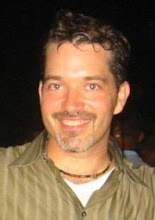
If you have never read the John Loomis' book, A Revolution of Forms, I highly recommend it. (Loomis is pictured to the left at last night's opening). It chronicles the birth and premature death of the cultural and architectural marvel of Cuba's National Schools of Art.
Readers are also alerted to Alma Guillermoprieto's fantastic memoir, Dancing with Cuba, which is set during the 6-months she spent teaching at one of the schools back in 1969.
Tonight here in NYC, I'm headed down to Tribeca Cinemas to see the new documentary, Unfinished Spaces, which is also about the Schools. Here's a blurb from the film's website:
Cuba's ambitious National Art Schools project, designed by three young artists in the wake of Castro's Revolution, is neglected, nearly forgotten, then ultimately rediscovered as a visionary architectural masterpiece.
In 1961, three young, visionary architects were commissioned by Fidel Castro and Che Guevara to create Cuba's National Art Schools on the grounds of a former golf course in Havana, Cuba. Construction of their radical designs began immediately and the school's first classes soon followed. Dancers, musicians and artists from all over the country reveled in the beauty of the schools, but as the dream of the Revolution quickly became a reality, construction was abruptly halted and the architects and their designs were deemed irrelevant in the prevailing political climate. Forty years later the schools are in use, but remain unfinished and decaying. Castro has invited the exiled architects back to finish their unrealized dream.
Unfinished Spaces features intimate footage of Fidel Castro, showing his devotion to creating a worldwide showcase for art, and it also documents the struggle and passion of three revolutionary artists.
Directed by Alysa Nahmias and Benjamin Murray
2011 / HD / Color / 16:9 (1.78:1) / 86 min / Stereo