Sunday, September 9, 2012

LGBT Lives in Contemporary Cuba


LGBT Lives in Contemporary Cuba 
at the Schomburg Center, Sat., Sep. 15, 3:00 p.m.

I don't expect Mariela Castro to be in attendance for this event but she should return to NYC just for it. She could contribute a bit and, I'm sure, learn a lot too. 

It's really a fabulous set of smart people.  Be sure to RSVP.  See you there!

Although Cuba has made major advances in LGBT rights in recent years, homophobia remains a problematic human rights issue.  A panel of scholars, writers, and activists, featuring Jafari Allen, Emilio Bejel, Mabel Cuesta, Ignacio Estrada, Leannes Imbert, and Achy Obejas, will discuss continuing challenges. 

Thursday, September 6, 2012

Jorge Duany Appointed as New CRI Director


Jorge Duany Appointed as New CRI Director
Wednesday September 5, 2012

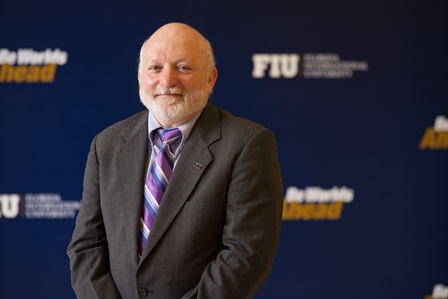
Cuban Research Institute announces new director

Jorge Duany has joined FIU as the director for the Cuban Research Institute.

Image 1

He brings with him a passion for shaping the conversation about Cuba and her people. Born in Cuba but raised in Puerto Rico, Duany has long struggled with answering the question: Where are you from? He sometimes just answers, "I'm Cuba Rican." He became interested in the idea of migration, specifically in the Spanish-Caribbean migration, during his time in Puerto Rico and has published extensively on migration, ethnicity, race, nationalism, and transnationalism in the Caribbean and the United States.

"I would like CRI to focus more on the Cuban American community and the Cuban diaspora in the 21st century," Duany said. "I want to strengthen the CRI-faculty relationships, courses, fellowships and summer programs."

Along with his appointment at CRI, Duany also will serve as an anthropology professor in the Department of Global and Sociocultural Studies within the School of International and Public Affairs.

"Dr. Duany brings a unique perspective to our Cuban studies," said John Stack, executive director of the School of International and Public Affairs and associate dean of the College of Arts & Sciences. "His passion for Cuba and her people will help invigorate thoughtful conversations about the role Cubans play internationally and about the future of Cuba, itself."

Prior to joining FIU, Duany served as acting dean of the College of Social Sciences and professor of Anthropology at the University of Puerto Rico, Río Piedras. He currently belongs to the editorial boards of academic journals including CENTRO: Journal of the Center for Puerto Rican Studies, Cuban Studies, Latin American and Caribbean Ethnic Studies, and Latino Studies.

Duany received his Ph.D. in Latin American Studies, specializing in anthropology, from the University of California, Berkeley. He received an M.A. in Social Sciences from the University of Chicago and a B.A. in Psychology from Columbia University. He served as director of University of Puerto Rico's Department of Sociology and Anthropology and director of the journal Revista de Ciencias Sociales. He has had visiting teaching and research appointments at several United States' universities, including Harvard, Connecticut, Wisconsin, Florida, Michigan, Pennsylvania, and the City University of New York.

Thursday, August 16, 2012

Un panorama actual: Estado de SATS participa en ASCE, 2012

Hacia donde va Cuba? Desde La Habana...

Con Oscar Espinosa Chepe, Karina Gálvez, Wilfredo Vallín, entre otros...

Sunday, August 12, 2012

Paul Ryan on Cuba?: American Bridge | Scribd

Some surprising facts about Representative Paul Ryan's voting record on Cuba.

Go to page 163 of the American Bridge report below.

http://www.scribd.com/mobile/doc/102084820/html5#outer_page_101

More "liberal" than Obama, or perhaps so far to the libertarian "right" that he gets some things right?

What will Florida's Cuban voters think of this?

And Marco Rubio...?

(H/T Ariana Hernández @ EthnoCuba).

Thursday, August 9, 2012

NPR - Talk of the Nation: "What the future holds for Cuba's economy"


What The Future Holds For Cuba's Economy - August 9, 2012
Talk of the Nation [30 min 10 sec] 

In Cuba, President Raul Castro has plans to reform the economy, but many challenges lie ahead before the country can move forward. Many of the changes are being implemented slowly because of resistance from within the Communist Party. 

Guests 
Ted Henken, associate professor of sociology and Latin American studies, Baruch College 
Enrique Pumar, chair of the sociology department, Catholic University of America 
Sergio Diaz-Briquets, author of Conquering Nature: The Environmental Legacy of Socialism in Cuba

Wednesday, August 8, 2012

La Generación Y está en Llama! & Cuban(-Americans) in London, 2012

Generation Y wins again!

I am not making this up.

Selección de nombres de deportistas cubanos que participan en Londres 2012:
Selection of names of Cuban athletes who are participating in the 2012 London Olympics:

A (2): Arasay and Ariannis

D (7): Dailin, Daisurami, Darisleydis, Dayaris, Dayexi, Dianelys, and Diosmely

E (2): Eglys Yahima and Erislandy

G (1): Glenhis

H (1): Hanser Lenier

J (2): Jeinkler and Josleidy

L (2): Lesyani and Leuris

M (2): Marlies and Mijain

N (1): Nelkis

O (2): Onix and Oreydi

R (2): Robeisy and Robelis

S (1): Serguey

Y (15): Yaima, Yaime, Yariulvis, Yasmani, Yosbany, Yasnier, Yarisley, Yargeris, Yoelmis, Yoslaine, Yowlys, Yulitza, Yumari, Yunior, and Yurileidys

(H/T Ariana Hernández @ Ethno-Cuba).

And now for the Cuban-Americans...
Robin Prendes: (Sailing) Cuban-born Robin Prendes moved to Miami with his parents at the age of 6. He began to row there, at the American Barge Club, at the age of 12.  Born in Matanzas, Cuba.

Danell Leyva: (Gymnastics)  Cuban-born Danell Leyva fled Cuba with his mother and older sister 18 years ago. Now here he was, gold medal around his neck, USA emblazoned on his chest.  "I'll always be proud to have been born in Cuba. I'll forever be Cuban," Leyva said before the world gymnastics championships, where he won the parallel bars title on Oct. 16 to give the U.S. men their first gold medal since 2003.

Manny Huerta:(Triathelon) Cuban-born Manny Huerta's grandmother fled Cuba in the 1980 Mariel boatlift.  "She just said it was a very small boat, it was very crowded," said Huerta, 28. "She was just happy that she was able to make that trip. Thanks to her, we were able to move to the U.S." She was granted U.S. citizenship and then helped Huerta, his family get visas to join her in the U.S. In Cuba, Huerta's mother was a university physics professor. Now she's a driving instructor in Miami.

Amy Rodriguez: (Soccer) "I'm really competitive," she says. "That's probably why my coaches always put me at forward because I'm the one that's always persistent, always the one that's going out there and play after play trying to make something happen. I'm part Hispanic -- my dad's Cuban -- so that fiery Latina attitude definitely [comes out] in my game."  Rodriguez says she's pretty Americanized and only speaks a little Spanish. But there are plenty of family reunions where Grandma cooks traditional dishes like congri, a mixture of rice and beans.

Christina McHale: (Tennis) Born in Teaneck NJ-- She is the daughter of John and Margarita McHale. Her father John is an Irish American while her mother Margarita was born in Cuba.

Ryan Lochte: (Swimming) By now, you know all about him.  Let's remind everyone that his mother was born and raised in Cuba and he loves his grandmother's cooking! His favorite food is Bistec empanizado, picadillo y ropa vieja.  Yeah!

Friday, August 3, 2012

This is a test: Will "Opera de la Calle" be allowed to reopen?

In the last few weeks, three of the leading foreign journalists who live in and regularly report on Cuba have published a series of fascinating installments in the ongoing, and as yet unresolved case of the private restaurant and cabaret "El Cabildo" and it's in-house company, "Opera de la Calle."

Opera de la Calle combined a cultural project with a paladar, 
which allowed it to pay the salaries of all its employees 
and cover its other overhead costs.  Photo: Raquel Pérez. 

First, on July 11, Marc Frank of Reuters published a provocative article entitled, "In Cuba, an Opera Singer Builds an Empire." While the article is a great introduction to El Cabildo and its resourceful and revolutionary founder and director Ulises Aquino, perhaps Frank should have left the word "empire" to government propagandists.

Soon after the article was published, Aquino was called to account by the authorities and, apparently unsatisfied with his explanations of his business plan, they carried out a surprise raid on his operation on Saturday, July 21, interrupted his show, pulled him off the stage as the shocked audience looked on, and proceeded to carry out a 4-hour inspection.

As was later reported by BBC correspondent Fernando Ravsberg on his blog "Cartas desde Cuba" (and at Havana Times in English), in the end, Aquino was stripped of his various business licenses for a two year period and accused of a number of economic crimes including having too many chairs (150) for a private restaurant, serving products whose origins could not be determined, having unauthorized employees, and, most galling, of undue "enrichment" since he charged his patrons a $2 cover and paid his employees the equivalent of $80 a month (roughly 4 times the average state salary).

Ulises Aquino is an important Cuban lyric vocalist who has tried 
to promote the genre among his fellow Cubans using the cultural 
project "Opera de la Calle," while also incorporating “folklore and
the typical archetypes of our society.”  Foto: Raquel Pérez 

The latest update on the story was reported by the always intrepid and incisive NPR/Global Post correspondent Nick Miroff. According to Miroff, the case has sent shock waves through Cuba's fledging community of private entrepreneurs since Aquino seems to have been punished for doing exactly what the government of Raul Castro has been promoting: creating well-paying jobs in the non-state sector and reducing the economic burden on the government.

However, it seems that not everyone - especially those Aquino calls "mid-level bureaucrats endangered by all these new opportunities" - is on board with tolerating, much less promoting, Cuba's new entrepreneurial sector.

You can listen to Miroff's excellent NPR story here.

Miroff notes that this is a test case whose outcome will show how serious Raul Castro's government is about the depth and permanence of its economic reforms. "If they intervene to help re-open El Cabildo," writes Miroff in his related Global Post story, "they will send a clear signal that Cuba's new small businesses deserve encouragement, not strangulation."

However, if the operation which employed as many as 120 workers (being perhaps the largest private business on the island) is left to die a bureaucratic death, it will show "that the skeptics are right, and Cuba hasn't changed much after all" (as Miroff notes in his NPR broadcast).

If that happens, Miroff notes that Aquino will have lost, but quotes him as saying:

"The [real] loser here won't be me. It'll be our country."

Ulises Aquino, a prominent Cuban singer, is the owner of 
the caberat and restaurant. He describes himself as 
a strong supporter of Cuba's socialist system and split the earnings 
among his 130 employees. Photo: Nick Miroff for NPR. 

Readers can read more about "Opera de la Calle" on John McAuliff's blog and a bit more about the case at Diario de Cuba. Be sure to check back here or follow me on Twitter @ElYuma to see how the story ends.

Friday, July 20, 2012

Acuse de recibo: Seremos como El Che?

El mundo, sí, es un pañuelo. 
It is indeed a small world. 

I thought readers might like to take a peak at this brief e-mail exchange between me and Joshua, a "year 12 student" (which I think is the equivalent of a high school senior and not a 12-year old) from Australia. 

* * *


On Jul 19, 2012, at 11:06 PM, Joshua wrote:

Hello, I am a year 12 student in Queensland, Australia. I am currently doing my final assessment on a biography about Che Guevara. I have to present a Oral speech presentation about Che Guevara, using a biography as a basis. I have to present information about how Che Guevara was an agent of change in history, how he affected historical events and what historical opinions on him say.


The book I chose as my basis for this oral is the Che Guevara book in the Critical Lives series published by Alpha Books. I was wondering if you would be able to assist me with any information about Che Guevara. Such as what your opinion on him is, why you wrote in the book about him and any other information that could assist me in my assessment.

Any help you could provide would be much appreciated.

Yours Sincerly, Joshua

* * *

Joshua,

Wow!  It is quite enterprising of you to reach out to me as part of your project.

Ernesto "Che" Guevara de la Serna is certainly a complicated and controversial figure even now 45 years after his death. To assess the impact of his life is difficult since he had so many different stages and phases. Another difficulty in assessing his life is that he tends to be either turned into a hero, saint, and martyr by his fans on the one hand; or a villain, terrorist, and murderer by his detractors on the other.


I myself am more of a detractor than a fan of his, but I can and do recognize his important contribution to Latin American political history and especially to anti-capitalist and anti-imperialist resistance around the world.

To be brief, I'd say that his most important positive contribution was to recognize, denounce, and confront the abuses of capitalism and U.S. imperialism; and to become a symbol across the world for others who fight for national self determination and social justice.

On the negative side, I'd say that his ideological rigidity, intolerance of dissent, and utopian messianism turned out to be a disastrous recipe both for Cuba and for the other countries and movements where his ideas were put into practice.

While his vision and example of the "new (altruistic and socialist) man" was inspiring to many, when applied on a national scale in Cuba it led to economic collapse, divisive and almost religious orthodoxy and sectarianism, and perhaps worst of all increasing alienation and cynicism (instead of inspiration and hope) on the part of new generations of children and grandchildren of the revolution.


It is quite instructive that the economic reforms currently being slowly put into place in Cuba today under the leadership of Raul Castro are the very antithesis of Guevara's ideas of revolutionary consciousness, voluntary labor, moral incentives, and the new man.


While Che, Fidel, and "socialism" are often celebrated as revolutionary, socialist "saints" today in Cuba (and even used to justify the need for an "updating" of Cuba's economic model), even the Cuban government has come to recognize that their economic ideas have been unworkable at best and ruinous at worst.


They still teach Cuban school children to shout "Viva Fidel!" (long live Fidel) and "Seremos como El Che!" (we'll be like Che), but almost everyone recognizes the irony and contradiction between these patriotic slogans that celebrate an idealized, defiant past and the "brave new world" that Cuba faces today.

Sandra Ramos - Seremos como el Che (1993)

I hope this helps and feel free to let me know if you have any follow up questions.

Sincerely,

Ted Henken

revolution not televised - BronXuseum - July 20, 5 p.m.

Open House at the BronXueum 
Tonight, July 20 
5:00 - 8:00 p.m.

Sandra Ramos, Seremos Como el Ché (1993) 
Chalcography

REVOLUTION NOT TELEVISED
July 19 – October 7, 2012

Inspired by Gil Scott-Heron's famous song-poem from 1970 that detected a wave of cultural changes imperceptible to the mainstream, "revolution not televised" features works by contemporary Cuban artists.

Featured artists include: José Bedia, Tania Bruguera, Los Carpinteros, Carlos Garaicoa, Ana Mendieta, Sandra Ramos, and Esterio Segura Mora, among others.